Climate Crisis

Climate Crisis

Recurring record breaking weather events such as fires, hurricanes, and flooding have become common news. Pollinators like monarch butterflies and honey bees are in decline. Research now indicates that North America's bird population has decreased by 30% in 40 years. And NEWSFLASH! You can be part of the solution.

Take Action

+  3 BillionBIrds.ORG #BringBirdsBack
    -----------------------------------------------
+  Million Pollinator Gardens Network
    -----------------------------------------------


Showing posts with label winged wednesday. Show all posts

Wednesday, June 4, 2014

Winged Wednesday - Backyard Birding Basics

Wisconsin is one of the nation's hot spots for birding. The flyways for migratory birds along the Mississippi and the Great Lakes, as well as some fabulous lakes and wetlands bring many species through the state. If you are just getting into birds, here are a few tips to help you get started in your own backyard.


Indigo Bunting checks out our tube feeder.

Find a decent bird book you can use. A good guide will help you identify the birds you already have. I recommend something fairly small, perhaps one which doesn't have all of the species (you are unlikely to encounter all of North America's vast area of birds in your lawn), and make sure it has some really clear pictures. I strong recommend Stan Tekiela's Birds of... books. These field guides are broken down by state, are compact, and organized by color which makes finding the birds a snap.

Set reasonable expectations. Read through your guide and understand the birds and habitats. If there's no water nearby then you are unlikely to see much waterfowl; if there are few mature tress in your neighborhood then birds like Woodpeckers will be harder to come by. Knowing these things may drive your decision making on the next steps.

Feed the birds. Feeding solutions vary widely. You will need to decide what kind of feeder you want to use and what type of food to provide. Black oil sunflower is a pretty good catch all seed and can be fed from a variety of feeders.(See other posts on feeding the birds)


The American Goldfinch loves Coneflower and Black Eyed Susan.

Water the birds. Birds need water to bathe and drink. If you decide to setup a bird bath be sure to keep it clean. This can be a trying ask when keeping up with algae or messy birds. You may also decide you want to heat the bird bath during the winter.

Shelter the birds. There are a host of different bird houses which can be purchased to fit the needs of different species. Evergreens and woody shrubs also provide good cover for nesting or roosting birds. (Read more about bird houses.)

Landscape for the birds. Trees like Oaks which produce acorns can be very attractive to birds like Blue Jays, Woodpeckers, and Chickadees. Trees and shrubs with fruit like Hawthorns or Serviceberry may be attractive to Waxwings, Robins, or Gray Catbirds. Native wildflowers may attract Finches, Sparrows, and Hummingbirds. ((See our favorite plants for attracting birds)

Pace yourself. You don't need to all of these things at once, and some of things may simply take time. Trees don't mature overnight, and even after putting up a feeder it may take time for the birds to recognize that it's there. Be patient and enjoy.

Thursday, May 29, 2014

Winged Wednesday - Catching the Flycatchers

When getting started with backyard birding, you may find that it's easy to attract your first dozen or species by putting up a bird feeder. You may be able to increase the number or frequency by planting certain plants such as Cardinal Flower, Purple Coneflower, or Blue Stem grasses. The birds which can be most difficult to catch a glimpse of are the ones which you can manipulate less easily. Many birds have a diet filled with insects and small invertebrates. In an earlier post, we previewed some of the Thrushes you may encounter in your backyard. This post will focus on Flycatchers.


Eastern Phoebe came buy right after both our yard and our neighbor's yard was mowed.

Flycatchers are birds which specialize in catching flying insects in flight. Often they rely on a technique called hawking. Flycatchers may be found sitting on perches such as fence posts, shrubs, tree limbs, or wires. These energetic birds may bob a bit while perched. They make short flights out to catch insects before returning to their perch.

Common Flycatchers in the Midwest include: Eastern Phoebes, Cedar Waxwings, Eastern Kingbirds, Eastern Wood Peewees, and the Least Flycatcher. Birds like the Eastern Phoebe or the Least Flycatcher may be attracted your neighborhood if there is ample vegetation which provides a woody understory. Cedar Waxwings are often attracted to lawns which have trees or shrubs that fruit such as Pagoda Dogwood, Serviceberry, or the Cockspur or Washington Hawthorns. Kingbirds tend to be more prevalent in rural areas; I can remember seeing them on fence posts while growing up Central Illinois.


Unsure if it's the same Phoebe, but this was from the first time we saw one in the yard which was in 2013.

There are other things you can do as well to attract these birds. Remember that native vegetation supports native insect life, and native insects support native birds. You can also leave the grass of your lawn a little longer, as this will also increase your lawn's insect population. You may also find that after mowing when the insects are all stirred up is exactly when these birds will come to visit.

Wednesday, May 21, 2014

Winged Wednesday - The Neighborhood Owls

We usually start to hear them in the late fall and then throughout the winter. We are certain that they must nest in the Spruces up the street from us each winter. Our Beagle doesn't seem to like walking this way when they are hooting during the winter. On very rare occasion we have caught a glimpse of them in the night.

Our local Great Horned Owls have generally been fairly elusive despite being incredibly vocal. This past week while working in the garden, the local American Crows were quite raucous. Initially I ignored them assuming that it wasn't anything interesting, but after over an hour of the noise, I decided to investigate. They cawed at a large brown lump in our neighbor's tree, so I concluded I should get a camera to improve my viewing.

The brown lump appeared to be two young Great Horned Owls attempting to get some shut eye.


The Owls managed to outlast Crows but took off when our neighbor's mowing service arrived.

Great Horned Owls are large native raptors which are distributed widely. Like other animals who do well in backyards, they are pretty adaptable, and their diet consists of a variety of small mammals and even Skunk. During the winter our owls duet together, and generally we've found them to be welcome company.

Wednesday, May 14, 2014

Winged Wednesday: Two Orioles for the Price of One

It's May, and during May we watch for a host of birds which visit our yard for only a short period of time. Generally we are on the look out for Rose Breasted Grosbeaks, Thrushes, Flycatchers, and Orioles. At the end of April, I hang our Oriole feeder which contains nectar, grape jelly and orange wedges. This year to our surprise we attracted two Orioles for the price of one.


This year the Grosbeaks arrived about the same time as the Baltimore Orioles, I think they were greeting each other and talking shop.

The feeder drew in the usual suspects first. The Baltimore Orioles arrived at the feeder on May 2 and have visited the yard everyday since. We've seen both male and female birds. The males are dark black with a neon orange underside. They often whistle for awhile up in the trees or on the phone line before coming down for a treat. The female birds seem to arrive later and come to the feeder less often; they are a yellowish orange with a grayish back and wings.


The male Orchard Oriole was squabbling with a female Baltimore.

This year, we also managed to attract a pair of Orchard Orioles. They arrived on May 12. They seem to be little smaller than the Baltimore Orioles and a bit more skittish. The male is primarily black with a bold chestnut red underside. The female looks a lot like the Baltimore females but is more yellow, almost softer in color.

Both species seem particularly interested in the jelly, which we bought on the cheap. It's generic grape from a squeeze bottle. Having used a jar and spoon in the past, I'd strongly recommend squeeze bottle, it's so much easier to fill the hanging feeder. They have also really gone through the orange wedges, but neither species seems particular interested in the nectar unless both the oranges and the jelly are gone.

Are you seeing Orioles in your neck of the woods?

Wednesday, May 7, 2014

Winged Wednesday May's Birding Blues

Blue is an interesting color which isn't overly common in nature. Nature is full of brown, green, black, white, and perhaps yellow and red may even be more common. Wisconsin like the rest of the Upper Midwest can count on a couple of things to be fairly consistently blue: the sky, the lakes, and Blue Jays.


Regal Blue Jay looks down upon the yard.

Today however we had a very blue visitor. An Indigo Bunting dropped in for a visit. This blue Finch joined a colorful array of other birds as our Orioles and Grosbeaks arrived at the end of last week. It's been our experience in the past that they won't stick around; they'll visit a handful of times in May then find somewhere a little more wild for their nesting, but they are a sure sign that spring is really here. This particular Bunting showed some interest in the Oriole feeder, which have been because these birds are interested in fruits such as Serviceberry, Strawberry, and Blueberry.


Indigo Bunting gets a better view from the top of the bird house.

Of course, other blue migrants have started to arrive. The Barn Swallows have taken up their usual haunt in the parking deck at work, and we've started to see Tree Swallows around as well. Our nest boxes remain empty, but I remain hopeful that a pair will take up residence in our yard. We regularly see Tree Swallows over the retention pond near our home, and they typically take up residence in bird houses in a nearby park.


Acrobatic Tree Swallow takes break on a nest box.

The other blue migrant we expect to see but have yet to spy this spring are the Eastern Bluebirds. Typically we have only seen them in the park or when we make it out somewhere more rural, but last spring they came to check out one of the nest boxes in our yard. It was occupied at the time by Black Capped Chickadees. If they come around again this year, they'll find two nest boxes which are currently vacant, so we remain hopeful.


Hopefully he'll remember us and return.

Wednesday, April 30, 2014

Winged Wednesday - May Arrivals

In Wisconsin April is coming to a cool, rainy end, and it's time to start thinking about warmer, sunny weather in May. Although it looks like May will get started off mirroring April's end, we eagerly await our last round of migrating visitors. Our species count for this year is already slightly behind last year, but perhaps the next couple of weeks will help us make up some ground. So who are the birds we are looking forward to seeing in May?


Two female Grosbeaks have a morning bath.

Rose Breasted Grosbeak: We welcome a handful of these birds every year. Typically we get a couple of pairs who will hang out in our backyard for about 2 weeks before moving on. These Cardinal cousins come up from Latin America to do some breeding in Wisconsin's forests; they are happy to stop off at feeders and eat black oil and striped sunflower seeds. Their call is almost Robin-ish, and we eagerly await their return.


Male Oriole goes for the jelly.

Baltimore Oriole: We had orioles come visit for the first time last year. They visited for a little over a week in mid-May before moving on. During that time our Oriole feeder contained nectar, held orange wedges, and had spoonfuls of grape jelly. They didn't seem to take much to the nectar, but they did seem to enjoy the grape jelly. They nearly polished off a jar of the cheap stuff purchased at our local grocery store. Last May, the weather was fairly warm, so I made sure to clean the feeder at least every other day to prevent mold growth in the nectar. Our feeder is also suspended from a large ant moat to prevent insects from accessing the sugary treats.


This House Wren snagged a spider in the garden.

House Wren: Our summer wouldn't be complete without the House Wrens starting a family in our yard. Since putting up the bird house 2 years ago, we've had Wrens nest in it each year. They spend a lot of time foraging for insects in our wildflowers and regularly chastise me when I go into the garden. In the morning, they sing from the telephone wire which passes over the bird house and garden. They are rather talkative, sort of funny looking little birds, but their presence really brings the yard to life.

Which birds are you still waiting for?

Wednesday, April 16, 2014

Winged Wednesday - The Thrush Rush

The spring brings a wave of migrants to our yards, gardens, and parks. The time period from mid-April through June can make or break a bird count. One group of these migratory visitors who can really help boost a bird count are the Thrushes.

The Thrushes have traveled from the south in search of food and mates in the north. Some of these birds will stop and nest in the Upper Midwest, while others will continue their journeys northwards.

The most common of these visitors is the state bird of Wisconsin and Michigan, the American Robin. This Thrush thrives in backyards looking for grubs and worms. They are considered the heralds of spring, and they are the Thrush we can all pretty much count on seeing.


This Gray Catbird dug around in our compost before paying the neighbors' bushes a visit.

Eastern Bluebirds are becoming an increasingly common Thrush after their numbers had dropped off. Efforts to install birdhouses and monitor them over time have helped bring back the Bluebird. Like most Thrushes, they'll need the right situation to come bounding into your yard. In their case, shelter is the right incentive. Bluebirds will look for houses where they have the appropriate surroundings to forage for food, where there aren't too many other Bluebirds around, and they may require protection from House Sparrows and Starlings. (See an earlier post about birdhouses)


This Swainson's Thrush spent a couple of rainy evenings foraging in the bushes.

Other Thrushes may visit your lawn looking for food especially during or immediately after transit. In the early part of spring, berries may be their best dietary option. Parts of Wisconsin are still seeing snow, which means insect foraging isn't exactly an option. Plants like Staghorn Sumac, Dogwood, Hawthorn, and American Holly have fruit which may persist over the winter and provide food for these birds. We have seen Hermit Thrushes, Gray Catbirds, and Swainson's Thrushes scoping out our compost as well.


A Hermit Thrush at the edge of the compost.(Note - He may be hard to see, he's right in the center.)

As the weather improves, expect that you may see these birds in your yard if an understory of relatively dense shrubs is available, and if there are other sources of fruit such as Serviceberry, Chokeberry, or Nannyberry. Come fall, they will make their exit, and the following spring the cycle and count will start again.

Wednesday, April 9, 2014

Winged Wednesday - Composting is for the Birds

Having a backyard compost is useful for a number of reasons. It prevents yard waste from being landfilled. It can used to provide nutrition to the plants on the property. And it turns out that it can be a good way to attract birds.


Our compost pile is the back corner of the lawn.

Here's a short list of items you are likely to find in our compost:

  • Dried out grasses and wildflowers
  • Fruits and vegetables from our kitchen
  • Leaves from the previous autumn
  • Sod removed from the yard to make way for other plants.

This small combination of organic materials does a remarkable job attracting birds for various reasons. In the spring, birds stop by the compost in search of nesting materials. They are happy to eat fruit scraps from our kitchen especially blueberry and strawberry. They can forage for leftover seed from the wildflowers and grasses.


White Throated Sparrow forages in the compost.

The compost also supports other life. Insects live in the compost amongst the decomposing plant matter, dirt, and debris. The White Throated and White Crowned Sparrows which came to visit us last year spent a fair amount of time scratching away at the borders of the compost. Black Capped Chickadees, Blue Jays, and the occasional Gray Catbird have been know to land in the compost and pick away a little bit as well.


Of course the American Toads like the bugs in the compost too.

Our yard has many features which help attract birds including: feeders, houses, trees, shrubs, and wildflowers, and our man-made brush pile contributes to the success of our yard's biodiversity just as much as the decorative features of the yard.

Wednesday, April 2, 2014

Winged Wednesday - Five Favorite Plants for Feeding the Birds

Although bird feeders, bird baths, and bird houses are all good ways to attract birds to your yard, the most effective way to attract birds is to turn your yard into a bird sanctuary through landscaping. Plants can provide shelter for roosting or nesting, and they can provide food. Here are some great native plants for you to consider when landscaping your yard for wildlife.

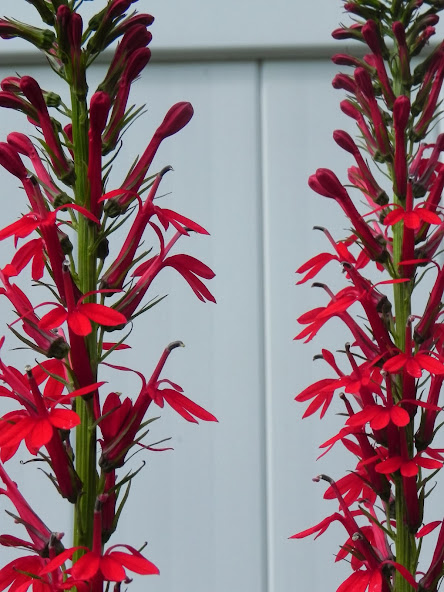
Cardinal Flower is an interesting wildflower with brilliant red flowers which display almost like flags. It's relatively easy to grow. We have two rows of it, one which is in partial shade, and the other is full sun. The row in partial shade does better than the role in full sun. Our Cardinal Flowers grew to be a little more than 3 feet tall last summer. The plant doesn't produce fruit or abundant seed, but it did have frequent visits from Ruby Throated Hummingbirds in July and August.


A couple of our Cardinal Flowers

Purple Coneflower is a familiar wildflower for many. It's an attractive pinkish flower which can grow to be fairly tall. We had some this last year which grew to be 4 feet tall. Our Coneflowers grow in full sun and are planted quite thickly. During the early spring when they are mostly leafy vegetation, they are frequented by rabbits for shelter and even Mourning Doves. During the summer when the flowers have bloomed, the local House Wrens do a fair amount of insect hunting amongst them. The Coneflowers produce abundant seed and attract American Goldfinches, Dark Eyed Juncos, Pine Siskins, and American Tree Sparrows in the fall and winter after the plant has become dry and brown.


Wren catches spider in the Purple Coneflower.

Black Eyed Susan is another familiar widflower. Our Black Eyed Susans grow mixed in with our Purple Coneflowers, our neighbor refers to it as "the jungle". The Black Eyed Susans don't grow as tall as the Coneflowers, but they do spread abundant seed around. They tend attract the same group of birds during the fall and winter as the Purple Conflower.


American Goldfinch finds a wildflower snack.

Allegheny Serviceberry is a shrub which produces a white flower in the spring. Ours is planted at the center and rear of the wildflower garden. We planted it last year, and it produced some fruit. After I had seen American Robins and Northern Cardinals eat some of the berries, I decided it might be something to try. I won't try them again; the birds can keep them. In the end, it's an attractive flowering shrub which produces berries eaten by birds (even if not eaten by humans); we're so happy with our one that we've decided to plant a couple more this year to replace the Coralberry bushes which were eaten by the rabbits.

Big Blue Stem is a tall native grass which grows to around 7 feet or so. It lines the back of our wildflower garden and is remarkably attractive both when green and fresh as well as later when dry and golden. Seed tassels form at the top, and each winter we enjoy watching the birds land on the stalks, attempting to attain the seed they seek. The bottom of Big Blue Stem is thick and full and provides some winter cover as well. We've seen American Goldfinches, Pine Siskins, American Tree Sparrows, and Dark Eyed Juncos in the Big Blue Stem during the winter.


American Tree Sparrow enjoys the Big Blue Stem.

One key is planting a good variety of plants. Having a diverse set of plants will help provide food at different times of the year for different kinds of birds. We've also tried to plant in bunches, the Hummingbirds for example will have an easier time finding a cluster of a dozen or more Cardinal Flowers than if you just plant a couple. In the end, these plants are all attractive and showy while having the added effect of attracting wildlife; what more can you ask for?

Wednesday, March 26, 2014

Winged Wednesday - Five Things to Consider About Bird Houses

Bird houses can make excellent decorations in your lawn, and they can also help support native cavity nesting birds such as: Black Capped Chickadees, Eastern Bluebirds, House Wrens, Tree Swallows, and even Woodpeckers. Here are some things to consider when deciding if a bird house is right for you.

Select a bird to attract. Have some idea about what kind of bird you wish to attract. Bird houses come in a variety of shapes and sizes and can / should be mounted at different heights depending on the bird you wish to attract. A small house hung at four to five feet might be cozy for a Chickadee or a House Wren but would never do for an American Kestrel or a Wood Duck.


House Wrens use our nest box in the garden after the Chickadees each summer.

Beware of invasive species. House Sparrows and Starlings may attempt to use the bird house or drive out native birds. This again may affect your selection. If your yard is frequented by these birds, a smaller Wren house might be your best option as the small diameter of the hole will prevent larger birds from nesting. You may also be able to prevent nesting by delaying when you open your houses for business. I've found that if our bird houses are ready to go in March, the House Sparrows are happy to check them out, but if I wait until a week or two in April, the Chickadees and Wrens make good use of the houses with little to no trouble from the Sparrows. Note that House Sparrows and Starlings may attack native birds to take over an attractive nest site, you may need to reconsider putting up a bird house at all.

Inspect the nest site. Be aware of who is using your bird house, when they laid their eggs, how successful they were, and when they are done. It is interesting to watch baby birds grow up, but it is also practical. After the first brood has left, you can clean out the bird house so another nest can be built without the risk of diseases or parasites being carried over from the first nest.


This was the Chickadee nest from last year.

Be prepared to do some cleaning. Birds are fairly messy. The nests are fascinating works of art made of dead plant material, string, animal fur, etc. And the birds will use the nest as a bathroom. Even if you decide not to clean out the box between broods, you need to clean out the nest box at the end of the season.

Consider the construction material. Cedar is generally best, it's natural, hardy, and water tolerant. Other materials like PVC may also be okay. Wood painted or chemically treated may be bad for the health of the birds.

The Bluebird Restoration Association of Wisconsin has a pretty detailed packet you can read here.

Wednesday, March 19, 2014

Winged Wednesday - Birds Arriving in April

Around our yard, April is the month of the Sparrow.

Understanding that other birds are arriving in April, our yard in April tends to fill up with Sparrows. Other birds start to fill in more in May when warmer weather is assured.

In April, we see a variety of different kinds of Sparrow. Of course, there is never escaping the House Sparrow who doesn't flee even the harshest winters, but in April, we welcome Chipping Sparrows, White Throated Sparrows, White Crowned Sparrows, and Song Sparrows.


The White Throated Sparrows seemed particularly interested in our compost.


While the White Crowned Sparrows foraged around the shrubs.


And the Chipping Sparrows spent their time in the grass.

In the end, only the Chipping Sparrows stayed around in the yard all year. By the end of May, both the White Crowned and the White Throated had left. Alas, our yard was just a pitstop on their migration further north. The Song Sparrows could be found nearer the neighborhood pond all summer long and only returned to forage in the yard in the fall before leaving for the winter.

Other Noteworthy Visitors

We had some other interesting visitors last April too. The Mallards return to local pond in March, hoping it has already defrosted. By April, they meander the neighborhood looking for a nest site. Last year, our yard was closely inspected but not selected.Mr. and Mrs. Mallard spent around an hour early one Sunday morning in the garden, in the compost, in the lawn just milling around. I'm certain they had a lively discussion about the type of neighborhood they wanted their ducklings to grow up in, if only they had met our beagle.


Mallard Drake surveys the yard. His partner was already making her exit.

And we had an Easter Phoebe come visit us a few times in April and early May, but come summer, we didn't see it again.


April is always a fun month in the yard. It sees our winter guests stocking up before departing for the year, and sees a host of others stop to refuel. Mornings where the yard is full of Purple Finches, Sparrows, and Dark Eyed Juncos are good mornings. April is only two weeks away, and I"m looking forward to the lawn being filled with little brown birds breakfasting in the morning as I sip my coffee.

What April visitors are you looking forward too?

Wednesday, March 12, 2014

Winged Wednesday - Invasive Birds

Just like our yards succumb to invasive plant species, they can also be inviting invasive birds species. Three common invasive include the: House Sparrow, Rock Pigeon, and the Starling.

These birds are all actually pretty different from one another, but they also share some remarkable traits.

The Rock Pigeon is very common in urban and suburban communities, in rural areas you can find these birds as well, sometimes living under interstate overpasses. Rock Pigeons are highly adaptable birds who do well in areas with a good amount of human traffic. If there are human hand outs they are happy to take them. They are the overseas cousins of the Mourning Dove and are more widely spread. They can be found pretty much everywhere around the world. Wherever humanity thrives, pigeons thrive as well.

The House Sparrow is another bird very commonly found around human habitation. This sparrow is an old world sparrow (Click here for a list of American Sparrows). They are fairly large for sparrows and not shy around feeders. They prefer to nest in cavities will displace native birds such as Black Capped Chickadees, Eastern Bluebirds, Tree Swallows or House Wrens from bird houses. They are known to feed in large groups and can clean out bird feeders rapidly.

Starlings are fairly intelligent, problem solving birds. In many ways they remind me of our native blackbirds. During the cold winter months, when my yard is without Common Grackles, Brown Headed Cowbirds, and Red Winged Blackbirds, it is also Starling free. Starlings like House Sparrows are not shy around feeders, and they compete with native cavity nesting birds for nest sites.

In short each of these species have developed the ability, skills, and diets to succeed around people. They often enjoy food like bread, and in urban areas they may constitute much of the visible wildlife.

Here are some steps you can take to control invasive bird species.
Don't feed them.
1. Make sure they don't have access to food garbage.
2. Don't feed them in the park or in your yard.
3. Don't use cheap seed mixes. Purchase individual seeds instead like Striped Sunflower or Safflower.
4. Consider investing in specialized feeders, for example there are suet feeders which only expose the cake on the underside.
Don't house them.
1. Be mindful of what birds are nesting your nest boxes. While it's illegal to disturb the nest of a native bird, invasive species are not given the same federal protections. (Note you should check any local ordinances as well.)
2. Like the point above, check also on or around your house, in your gutters, etc. These birds tend to be content enough to nest near human activity. This should not be tolerated. (Like the point above, you will need to mindful of native bird and local ordinances.)
3. Non lethal repellent systems can be constructed or purchased, as well as lethal options such as poison or trapping. There are even businesses which may offer pest control services for large problems like roosting starlings.(One more warning about checking local ordinances.)
Go native
Exclude invasive species by promoting native species. Try planting native plants which the native birds can feed from, nest in, etc. Make your yard a little less "human-y" and little more wild. You may find that you don't even need bird feeders anymore to attract birds.

Wednesday, March 5, 2014

Winged Wednesday: Let the Migrations Begin!

There are a handful of months during the year which I find particularly exciting. The first of which is just kicking off. The spring migration (March - May) is an exciting time. During March and April, we can reasonably expect to see an overlap of visitors. The Dark Eyed Juncos and Pine Siskins who arrived during the fall migration will still be around as the American Robins and Red Winged Blackbirds begin to arrive.

It's hard to imagine that the spring migration is upon us since there is still snow on the ground which has persisted since December, but it would seem that the thaw could be upon good portions of the upper Midwest by this weekend.

Male Red Winged Blackbird Singing

The first wave of visitors is always the most interesting to watch. In the evenings when I leave work it's currently silent, but in the coming weeks I can count on a chorus of Red Winged Blackbirds to greet me as I depart. They gather into large flocks to roost at night for the first few weeks after they arrive and then they seem to disperse. The same can be said of the Common Grackles in some local neighborhoods, but their song (while welcome) isn't quite as enjoyable.

Pine Siskin on my safflower feeder.

Their arrival also marks the start of departures. The Pine Siskins, Red Breasted Nuthatches, and Dark Eyed Juncos will soon move further north, and it's during this this window of time that our yard seems to be most active. Both the birds departing and those arriving will be on the prowl for food. Feeders with seed, suet, and fruit are good places to start. If you've left last year's native plants (now dried up husks) in place, wait to cut or burn them back until some point in April; this will allow birds to feed on any remaining seed or forage for any insects which reside amongst the leftovers. Keeping a compost pile can be a useful way to attract migrating birds as well; last spring White Throated and White Crowned Sparrows spent most mornings foraging in our compost.

It may still look snowy and white outside, but I assure you that brighter days are just around corner. Keep watching the skies.

Wednesday, February 26, 2014

Winged Wednesday - Birds in the News

In tracking our feeder visitors this winter, I'd noticed a decline in activity. I've assumed for some time that this was related to the extremely cold weather we've had. I can't say that this WI State Journal article supports my assumption exactly but given yesterday's post, I thought I'd share it here.

Apparently WI's wild turkey population is struggling with our cold weather.

This of course relates to a more pressing issue. March 1st is only 5 days away, but the temperatures aren't expected to improve. During a typical year, we could start seeing Red Winged Blackbirds and Robins migrating back in large numbers about 15 days from now.

Cornell's Bird Forecast seems to indicate that the migrations are already starting, so it looks like it's shaping up to be a cold return.

Wednesday, March 14, 2012

Winged Wednesday - Spotlight on Sunflower Seeds

So in the past weeks, I've touched on Nyjer Seed and on Safflower Seed. Today, I'll provide some information on Sunflower Seeds. These are pretty common feeder seeds that many people use. These even make appearances in the general wild bird seed mixes which I do not recommend.

Sunflower Seed comes in two varieties: Striped and Black-Oil. The Striped are larger than the Black-Oil and have a thicker shell. The Black-Oil seeds are the more common seeds which many people use.


Sunflowers are native to the Americas and are plants that many people put in their gardens. They are cultivated for human consumption as seed and as sunflower oil.


A host of bird species are attracted to the seed because it contains vital oils. Many birds may also readily eat it because like them, it's native to the Americas. They would eat it even if you didn't offer it in a feeder. Some birds that you find eating your Black-Oil Sunflower seeds include: Northern Cardinals, American Goldfinches, Black Capped Chickadees, White Breasted Nuthatches, and Purple Finches, but really they are very good general all purpose seeds. A small list of birds seem interested in the Striped Seeds: Rose Breasted Grosbeaks, Evening Grosbeaks, Blue Jays, and Black Capped Chickadees.


These seeds can be easily dispensed in hopper feeders, tray feeders, or feeders made of wire mesh. One thing to note is that the shells of seeds can make a mess. They are totally worth the mess, and very easy to buy since they can be found anywhere from grocery stores to Farm & Fleet to Wild Birds Unlimited.

Wednesday, March 7, 2012

Winged Wednesday - Spotlight on Nyjer Seed

Last week, I posted some useful information about Safflower Seed, which has become my favorite bird feeder foods. This Wednesday, I'd like to share some information about my second favorite seed, Nyjer (also called Thistle or Nyger seed).

While often called "Thistle", Nyjer is in fact not Thistle. Thistle is in the genus, Cirsium, while Nyjer is part of the genus Guizotia. Guizotia are only native to Africa.The Nyjer seeds are very small and hard. The seed is black and fairly potent.

Because of its small size, there are special feeders with smaller mesh or holes so that the seed doesn't come spilling out. Tube feeders are generally recommended for this type of seed. The tube keeps the seed from blowing away or getting wet and typically allows multiple birds to feed. You may also find mesh bags sold as sock feeders. The only problem with tube and sock feeders is that some birds won't cling or perch to them even though they'd like to dine on the Nyjer.


Nyjer is typically associated with American Goldfinches, which is how it came to be called "Thistle", but other birds will also eat it. Dark-Eyed Juncos, Pine Siskins, and Mourning Doves will readily eat Nyjer. The problem for the Dark-Eyed Juncos and Mourning Doves is that they don't usually do well with sock or tube feeders. You can however spread some seed along the ground. Be aware that laying seed on the ground may attract English House Sparrows who will readily eat this seed from the ground.

We originally used a sock feeder which got a lot of attention, but eventually the draw-string broke. We now use a yellow tube feeder which has gotten even more attention. If you are looking for a good way to attract American Goldfinches, I'd recommend placing one of these near some flowering Black-Eyed Susans and native grasses like Little Blue Stem.

Wednesday, February 29, 2012

Winged Wednesday - Spotlight on Safflower Seed

There are a good number of choices out there when it comes to bird seed. Over the next few Wednesdays, I'll cover some of the seed options, the pro's and con's of, what birds they attract, and what feeders I'd recommend using with them. This week's featured seed is Safflower.

Safflower is a distaff thistle which hails from the Mediterranean, particularly northern Africa. Its seeds are small, white, and hard like rocks. It's not typically found in your generic wild bird seed mixes, but can be found by itself or in specialty mixes.


Safflower's biggest pro is that feeder pests are generally not interested in it. House Sparrows, Starlings, and Squirrels will generally not eat Safflower seeds.

The biggest problem with Safflower seed is that it can make a really big mess. Assuming the birds are eating all of the seeds, the hulls or outer casing of the seed will be discarded on the ground. The pile builds up quick and isn't easy to rake up. It's also been my experience that certain birds, particularly House Finches, will discard a good amount of whole seeds. These seeds may also germinate.


Safflower seed is pretty good for attracting birds. We've found that if you have Safflower seed the arrival of House Finches and Morning Doves is guaranteed. We have also found that Cardinals, Purple Finches, Pine Siskins, Dark Eyed Juncos, and Black Capped Chickadees will dine on this seed.


Initially we had this seed in a hopper feeder which had little to no tray. The volume of seed being tossed to the ground was enormous. We quickly learned that this will not work for Safflower seeds. Hopper feeders are fine so long as they have a good-sized tray. We are also now using a tray feeder which helped prevent a lot of waste. The sides of the tray feed have made it more difficult for the birds to simply discard seed. I'd highly recommend trying to use something like a tray feeder or a hopper feeder that has some edging to help prevent messes under your feeders.

Wednesday, February 22, 2012

Winged Wednesday: Plants for Birds - Alternative Native Plants

I picked up a book titled Garden Secretes for Attracting Birds, and generally speaking it has lots of good ideas. So if you are in the market for birdscaping ideas, I recommend picking up a copy. The book does not however distinguish between native and invasive plants. Here are few take-aways which I wanted to share.


Beware of Honeysuckle! Lanicera sempervirens is a native plant from North America, but it is not native to Wisconsin or Minnesota. There are a host of invasive honeysuckles which have damaged wild places in Wisconsin. Some of these species include: Tartarian Honeysuckle, Amur Honeysuckle, and Japanese Honeysuckle. Invasive bush honeysuckles can take over the understory of wood lots, forests, and even our preserves and state parks. Invasive Honeysuckles spread quickly from our yards to wild spaces because birds eat the berries and deposit the seeds elsewhere. There are some native species of Honeysuckle you may want to consider instead: Northern Bush Honeysuckle, American Fly Honeysuckle, and Limber Honeysuckle. When these native plants have their seed spread by birds, they don't damage our wild spaces because they evolved as part of the biome.

Norway Spruce is suggested as a good evergreen tree for attracting birds like Red Breasted Nuthatches and Cross Bills. Instead of planting Spruces from across the pond, consider planting some that already grow in the state; White Spruce and Black Spruce are both native to Wisconsin. White Spruces are popular plants in people's yards and make good windbreaks. Black Spruce is not as common in yards but is used by Black Capped Chickadees, Warblers, Owls, and Jays for nesting and roosting; in other words, there is not an advantage to planting their Norwegian cousin.


Common Foxglove is a flowering plant suggested for attracting Hummingbirds and American Goldfinches. There are a number of tall flowering plants native to the American Prairie. Plants like Lavender Hyssop, Blazing Star, Wild Bergamot, Blue Lupine and Joe Pye Weed all make excellent replacements for Foxglove. There are a host of other tall flowering plants, so when you are looking for plants for Hummingbirds, it's very hard to imagine why you would need or want to plant Foxglove. If you are looking for flowers which will have seeds to attract American Goldfinches, I would recommend Pale Purple Coneflower, Purple Coneflower, or Black-Eyed Susans as being excellent seed producers and very effective for attracting finches.


These are just some suggestions about plants from the book that can be easily replaced with native plants. The book itself is pretty good and had some helpful ideas, but be aware that if invasive plants attract birds, the birds themselves will spread the seed and therefore distribute the invasive plants across their territory. No invasive plants are truly confined to your yard or garden; they will make their way out and about. So take a look at the book and use your best judgement.

Wednesday, February 15, 2012

Winged Wednesday - Bird Arrivals in March

Each fall a large part of the Wisconsin Bird population (and some of the human population) head south for warmer weather. The winter weather in the Upper Midwest is not generally friendly to the insect population, which forces those birds which depend on the insects to migrate. While many of these birds head far south to places in Central America, others only head as far south as places like Arkansas. The birds which remain state-side are the ones we can expect to arrive first. While I imagine that few people anticipate the arrival of blackbirds, I get quite excited about it because it's one of the first signs that Spring has come.

The Common Grackle will be one of the first birds to return. They are black with a shiny iridescence and yellow eyes. They tend to move about in large groups and may roost at night with other blackbirds. Early in the day as the sun comes up and as they gather at night, the grackles can be quite noisy. Their call is quite shrill, and they will forage in our yards and gardens. They will eat human food from our compost piles, they will eat seed from feeders, and they will look for insects in the turf grass.

The Brown Headed Cowbird is another blackbird which will return early. In my experience they tend to be more interested in farmers' fields than in backyards, but we've had them visit our feeders. They have an interesting sexual dimorphism. The male's coloring is where the species' name originates. The male has a solid brown head with a black beak and black body. The female is a sharp slate gray. They will bicker with other birds at feeders, and their aggressive behavior can be unwanted at feeders.

Red Winged Blackbirds are probably my favorite of the blackbirds. The males have bright red shoulders with a golden wing bar. In the mornings and evenings they may gather with grackles and can be heard across town. They spend a fair amount of time by storm water retention ponds, where the male birds will display in the evenings. I enjoy how well they balance on the tall reeds and grasses.

The American Robin is not a blackbird, but the Wisconsin State Bird should arrive during March. The robins can be found in our yard and gardens eating grubs, worms, and other insects from the ground. Robins are a thrush and can be quite aggressive with one another. They even look cocky as they hop around the lawn, and they fly into windows thinking that their reflection is another robin. Their nests are small bowls which will be filled with small blue eggs. They aren't particularly afraid of people and may try to nest near your house such as atop flood lights or on overhangs. Robins are viewed by many as the official herald of Spring.

Wednesday, February 8, 2012

Winged Wednesday - Local Raptors

There are many species of raptor which wildlife enthusiasts and birders hope to observe. Many of them may not be tolerant of human development so we don't generally expect them to show up in our backyard or in town. However just as many of our furry friends have adapted to suburban or urban life, the raptors have adapted as well. This post is just about the raptors we see or hear around neighborhoods in our area.

Cooper's and Sharp-shinned Hawks are smaller hawks and have become common sights around bird feeders. These hawks are fairly successful bird killers, and are attracted by the high concentrations of birds around feeders. We had a youngster around our yard last year. Our introduction came one night while we were sitting on our deck, and some Mourning Doves were milling around on the ground. Suddenly doves were airborne and there was a hawk at the base of the feeder, and as a quick as it descended it was up in the neighbor's tree. It had a number of other observed failed hunting attempts in the yard in June and July, and then one evening in late summer, as I was returning from walking the dog the Mourning Doves took off again. Initially I assumed it was from the arrival of the beagle brigade, and then our hawk friend snatched a dove in mid-flight and proceeded to devour it our neighbor's yard. So long as there are birds to feed on, these hawks will be around somewhere.

Red-Tailed Hawks are the large hawks people often see along the highway sitting atop the big green signs. They are expert mammal hunters. If there are squirrels, rabbits, mice, etc then the hawks should have plenty of food. If your yard, neighborhood, or local park is home to small mammals then on a warm day pay attention to sky. We often see the local Red-Tail above our own yard on clear days. We've seen it circle above enough to frighten our backyard wildlife, but we've yet to see it make a kill.

Great Horned Owls are highly adaptable. They are the most widespread raptor in North America. These owls have the distinct "hooting" that people identify with owls. They will duet when finding a mate. They seem to prefer perching in evergreens and are nightly ambush predators. Like the Red-Tailed Hawks they also feed on the small furry critters in our yards. They fly almost silently and may be difficult to spot in the dark, but we often hear our local owls when taking our dog on her bedtime walk.

American Kestrels are much smaller than the other birds on this list. You can even purchase nest boxes for these petite raptors. When driving, pay attention to the birds you see perched on the power lines. While you may see blackbirds, pigeons, and doves, these lines often have kestrels perched as well. Kestrels have a fairly varied diet of insects, small mammal, and birds. Their diet makes them fairly adaptable, but they do rely on woodpecker cavities for their nests. Hence, if you want to attract a kestrel to your yard, you could consider adding a large nest box.

Bald Eagles are not exactly the kind of bird I would expect to find in my yard. That said, if you live near a river, in particular one with a hydroelectric dam, you can find them hunting in groups during the winter. One example of this is the Sauk Prairie metro-area in Wisconsin. Because eagles need open water to fish, the eagles will stay near the dam as the waters begin to freeze. They gather in convocations and pick off the stunned or injured fish that make it through the dam. Other cities, like LaSalle-Peru on the Illinois River, also play host to convocations of eagles during the winter, so if you live on a river in the Upper Midwest you should keep your eyes open as you may be fortunate to see a Bald Eagle in your neighborhood.

This one fed in our yard over the summer.

Eagle over the dam in Sauk Prairie