Climate Crisis

Climate Crisis

Recurring record breaking weather events such as fires, hurricanes, and flooding have become common news. Pollinators like monarch butterflies and honey bees are in decline. Research now indicates that North America's bird population has decreased by 30% in 40 years. And NEWSFLASH! You can be part of the solution.

Take Action

+  3 BillionBIrds.ORG #BringBirdsBack
    -----------------------------------------------
+  Million Pollinator Gardens Network
    -----------------------------------------------


Showing posts with label lawn. Show all posts

Wednesday, September 23, 2015

Plant Your Corridor to Connect Remnant Habitat

There was a time when the gusto of Manifest Destiny, the promise homesteading, and the sheer lack of forethought led a nation to near ecological ruin. Species now extinct or extirpated; whole states had to be reforested, and eventually a conservation movement brought forth national parks and forests, and other such zones which create a patchwork of wilderness.


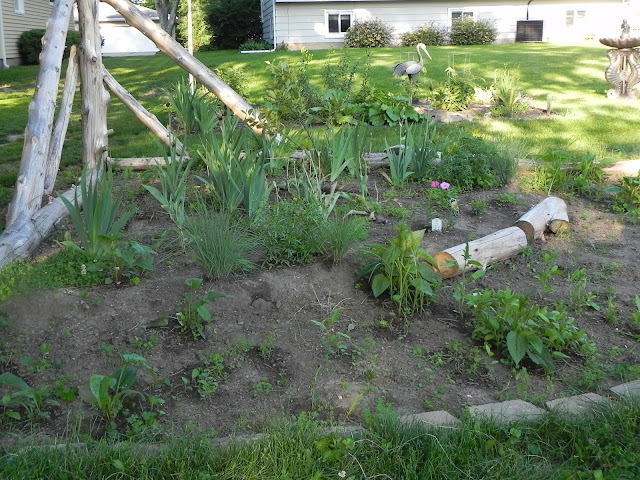
Remnant habit created by planting: Big and Little Blue Stem, Black Eyed Susan, Purple Coneflower, Butterfly Milkweed, Cardinal Flower, False Indigo, Lupine, Bee Balm, and Obedient Plant.

Today one can look at a map of Wisconsin and see this patchwork of green zones which largely dominates the northern portion of our state, and we are lucky. By comparison, our neighbors in Iowa, Indiana, and Illinois have no green spaces. The wilderness of these places is replaced by pavement or turned over by plow.

We live in a time where it has become clear that while these pockets of wilderness are beneficial, they are too sporadic and isolated to preserve the existing diversity of species over the long run. There's still some debate over the effectiveness of wildlife corridors ranging from wild success stories to dismal failure. While we consider the success and failure of modern efforts, we can take a moment to ponder these words:

The shrinkage in the flora is due to a combination of clean-farming, woodlot grazing, and good roads. Each of these necessary changes of course requires a larger reduction in the acreage available for wild plants, but none of them requires, or benefits by, the erasure of species from whole farms, townships, or counties. There are idle spots on every farm, and every highway is bordered by an idle strip as long as it is; keep cow, plow, and mower out of these idle spots, and the full native flora, plus dozens of interesting stowaways from foreign parts, could be part of the normal environment of every citizen. - Aldo Leopold

Wildlife corridors aren't and can't be specific zones and boundaries drawn on a map. Real corridors are created everywhere by leaving some of nature right where it was before we put in the road, plowed the field, or built our house.

If you look at a map of your municipality you may notice features that I noticed; things which Doug Tallamy points out in the The Living Landscape. Even on a smaller scale we isolate nature preserves and parks. There's a prairie on the east side of my town and a marsh on the southwest side, but in between are homes and roads and businesses and schools.

This is where we come in. One house, one yard providing remnant habitat is a start, one neighborhood is better. I started native planting as a project for myself. To see more birds. To test my green thumb. To do some basic green things like save on water and encourage biodiversity.


Immature Bluebirds back from somewhere, stopping by for a visit.

It's become a way of life and in a way an ethical code. In reading what those who came before me taught, I realized that my quarter of an acre was a small piece in a century of conservation efforts. Now when a Gray Catbird drops in, I wonder whether he is headed to or from the marsh. When the Bluebirds visit in the morning, I wonder whether they've come from the prairie this morning or from the wetlands. In my town, my yard is but a piece of a greater fabric; a piece of corridor.

Tuesday, September 8, 2015

Echoes of Leopold: The Spread of Invasive Species

Thus the English Sparrow, rendered innocuous by the shrinkage in horse was succeeded by the starling, who thrives in the wake of tractors. The chestnut blight, which had no passport beyond the west boundary of chestnuts, is being followed by Dutch elm disease, with every chance of spreading to the west boundary of elms. The white pine blister rust, stopped in its westward march by the treeless plains effected a new landing via the back door, and is now romping down the Rocking from Idaho toward California. Ecological stowaways began to arrive with the earliest settlements...-Aldo Leopold (Sketches Here and There)

What's remarkable about this statement is that it was true 1949 and remains true today. If nothing else the purchase and use of cheap bird seed with millet and cracked corn have benefited the House Sparrow and the Starling. Leopold missed the Japanese Beetle introduced to the U.S. in 1916, and he wasn't here to see the introduction of the Emerald Ash Borer or the European Oak Borer. Native plants are under constant attack which can be likened to the spread to the European diseases amongst Pre-Columbian native peoples in the New World. Trees and plants native to the Americas have no or little defenses from these invaders, and we risk losing them because of our landscaping and agricultural behaviors.

Leopold wondered in the 1940's if the West would get a handle on managing Cheat Grass. This also seems to be a battle lost by native plants. The question remains whether or not we have learned anything in 6 plus decades.

Leopold dedicated a good portion of his life to reclaiming the landscape for native plants. He worked on the Curtis Prairie restoration and his famous farm alongside the Wisconsin River. This challenge us to reclaim landscape for native plants is passed down to us and has new standard bearers. Each time we make a decision about which plants put in our yards, which ones to remove, we are having the same effect. Leopold described it as having the same powers as God, the ability to create (via shovel) and the ability to take away or destroy (via axe).

Douglas Tallamy is one of these standard bearers. The author of Brining Nature Home challenges to landscape native plants to the benefit of native insects, birds, and other wildlife. It was in reading Bringing Nature Home that I first felt a moral or ethical obligation to give back my land, to make my yard a viable habitat. If you aren't sure where to start take a look at Bring Nature Home or The Living Landscape, and then also check out the National Wildlife Federation's Gardening for Wildlife program for ideas.

Thursday, September 3, 2015

Forget the Blue Spruce, Go with a Midwestern Evergreen

I encountered something strange recently. Folks had homes built in a fairly typical mixed Oak, Pine forest in Wisconsin. They had removed most of the trees to put in turf grass, and then replaced the Pines and Oaks with Colorado Blue Spruce. I haven't quite wrapped my mind around bringing the suburbs to the wilderness, but here's a thought for Midwestern homeowners: forget the Blue Spruce and plant something that would naturally occur locally in your yard.

The Colorado Blue Spruce is a very popular conifer. They have vibrant color, and spruces planted together make excellent wind blocks. However, their native range is a corridor of the American West, and Blue Spruce has little ecological value in the Midwest. It's even become somewhat invasive in places where it's grown for Christmas trees, having escaped some plantations in the Northeast.

There are a number of evergreens native to the Midwest which are commercially available including: Eastern White Pine, White Spruce (sub species - Black Hills Spruce), and Eastern Red Cedar which should be considered in place of planting Blue Spruce.

All plants bring some value to our yards; that's why we plant them. In some cases, it's aesthetic like color or texture, in other cases it's functional like shade or barriers for privacy. All of the plants in our lawns also have some ecological value and function, some more, some less. All of these evergreens will establish roots that will help with water infiltration, and all provide cover for wildlife including nesting birds.

Eastern White Pines can be found in Wisconsin, Michigan, Minnesota, and northern parts of Iowa, Illinois, and Indiana. These Pines have good wildlife value and are a food source for both birds and mammals. Pine Warblers, Crossbills, and Pine Siskins, Chickadees, Nuthatches, and Woodpeckers can all be found foraging in Eastern White Pines. White Pines have low salt tolerance and are not necessarily good candidates to plant along roadsides.

White Spruce (subspecies Black Hills Spruce may be easier to find commercially available) is native to the northern part of the Midwest including parts of Minnesota, Wisconsin, and Michigan. White Spruce is an important food source for many animals including Red Breasted Nuthatches, Evening Grosbeaks, and Pine Siskins. White Spruce is also an important part of the Red Squirrel diet, and Snowshoe Hares rely on White Spruce as a winter food source. White Spruce is a salt tolerant species and can be planted along roadsides.

Red Cedars procedure "berries" which a host of birds eat, most notably Cedar Waxwings. These berries can be an important food source in late winter or early spring especially for birds like Robins who may arrive to find colder than expected conditions. It is also a fairly salt tolerant species so it can be planted along roadsides.

When next you decide to plant an evergreen, consider one of these three before you purchase the Blue Spruce.

Wednesday, September 2, 2015

Feeding Hummingbirds the Natural Way in Wisconsin

In Wisconsin the only hummingbird one is likely to encounter is the Ruby Throated. In order to foster encounters with these tiny birds people often opt for hanging a hummingbird feeder, perhaps not realizing that their own lawn can be an effective all natural food source.

Amongst our variety of native plants, three plants grow which were explicitly planted for the hummingbirds.

Columbine


Bee Balm


Cardinal Flower


The tiny birds show interest in other flowers, but they focus on these for a few reasons. Firstly each of these flowers (in our yard) is red (Note: We have red and pink Bee Balm). Just like the feeders and feed are red, hummingbirds really key in on the color red. Each of these flowers bloom at a different times of the year as well, in this order:

  • Columbine will open in May; they are one of the first to open in our yard every year.
  • Bee Balm blooms through most of the summer. It gets going around the time the Columbine is slowing down.
  • Cardinal flower blooms later in summer and with some luck will still have flowers in September.
  • By planting this combination of plants, the yard is pretty well set to provide a meal for hummingbirds for most of the duration of their stay. These flowers are all pretty easy to grow, and both Columbine and Cardinal flower will do well with some shade. In fact, my Columbines just get morning sun light, they spend much of their time in the shade. My Cardinal Flowers which are exposed to truly full sun seem to struggle a bit more than their neighbors which get some some shade.

    Bee Balm can be found in a few different colors. We have red and a pink color which is similar to the color of Wild Bergamont another member of the Monarda genus which is also good for attracting hummingbirds.

    Throughout the summer we have regular hummingbird visitors in the yard. We've even had some aerial combat this year. Planting for hummingbirds is pretty easy and adds splashes of vibrant colors to your lawn.

    Sunday, March 1, 2015

    2014 Species Diversity in Review

    Each year, we count the number of different birds, mammals, reptiles & amphibians, as well as bees & butterflies which we can identify in the yard.

    We started doing this hoping to see that as we planted more native plants, we'd expect to see the yard become more diverse.

    Here's what we saw in 2014.

    YearBirdsBees & ButterfliesMammalsReptiles & Amphibians
    2014401571
    2013401471
    2012311351

    2015 has frankly gotten off to a slow start, but perhaps things will pick up in the spring.

    Wednesday, June 4, 2014

    Winged Wednesday - Backyard Birding Basics

    Wisconsin is one of the nation's hot spots for birding. The flyways for migratory birds along the Mississippi and the Great Lakes, as well as some fabulous lakes and wetlands bring many species through the state. If you are just getting into birds, here are a few tips to help you get started in your own backyard.


    Indigo Bunting checks out our tube feeder.

    Find a decent bird book you can use. A good guide will help you identify the birds you already have. I recommend something fairly small, perhaps one which doesn't have all of the species (you are unlikely to encounter all of North America's vast area of birds in your lawn), and make sure it has some really clear pictures. I strong recommend Stan Tekiela's Birds of... books. These field guides are broken down by state, are compact, and organized by color which makes finding the birds a snap.

    Set reasonable expectations. Read through your guide and understand the birds and habitats. If there's no water nearby then you are unlikely to see much waterfowl; if there are few mature tress in your neighborhood then birds like Woodpeckers will be harder to come by. Knowing these things may drive your decision making on the next steps.

    Feed the birds. Feeding solutions vary widely. You will need to decide what kind of feeder you want to use and what type of food to provide. Black oil sunflower is a pretty good catch all seed and can be fed from a variety of feeders.(See other posts on feeding the birds)


    The American Goldfinch loves Coneflower and Black Eyed Susan.

    Water the birds. Birds need water to bathe and drink. If you decide to setup a bird bath be sure to keep it clean. This can be a trying ask when keeping up with algae or messy birds. You may also decide you want to heat the bird bath during the winter.

    Shelter the birds. There are a host of different bird houses which can be purchased to fit the needs of different species. Evergreens and woody shrubs also provide good cover for nesting or roosting birds. (Read more about bird houses.)

    Landscape for the birds. Trees like Oaks which produce acorns can be very attractive to birds like Blue Jays, Woodpeckers, and Chickadees. Trees and shrubs with fruit like Hawthorns or Serviceberry may be attractive to Waxwings, Robins, or Gray Catbirds. Native wildflowers may attract Finches, Sparrows, and Hummingbirds. ((See our favorite plants for attracting birds)

    Pace yourself. You don't need to all of these things at once, and some of things may simply take time. Trees don't mature overnight, and even after putting up a feeder it may take time for the birds to recognize that it's there. Be patient and enjoy.

    Sunday, June 1, 2014

    First Flowers of Spring 2014 - False Indigo, Blue Lupine, and Columbine

    After three years, our great backyard experiment is really starting to pay off. We started off the spring with cool, rainy weather, and we finally saw warmer weather in mid-May. The first plants to add color to the yard were the Serviceberries and the Eastern Redbud. These flowering trees and shrubs are regularly the first to bloom and add a splash of color. The Wood Violets also flowered, but while the ornamental trees and violets flowered, the garden plants grew tall and green.


    Our Redbud seemed to be particularly pink this year.

    We've had a recent warm streak, which brought with it semi-regular rain showers and thunder storms. With the warm weather and rain, the plants have grown. Yard maintenance has been relatively difficult to keep up with. The benefit has been each time I head out to weed, mow, trim, mulch or prune, I find something new has flowered.

    Columbine has grown wild behind our air conditioner since we moved in. Last year, we put down some Columbine seed near the existing plant in a previously unused flower bed. Two additional Columbines now grow with showy red flowers.


    The Columbine which prefers to grow behind the air conditioner.

    The flower bed in the front has its first Lupines. Last spring, we planted a half dozen Lupine plugs, but only two of the six came back after the long, cold winter. (We've seen similar results with the Little Blue Stems planted in the same bed.) We've added two more Lupines to the bed for now and noticed that some may have seeded themselves as some really little guys are also popping up.


    I would have been very sad if none of the Lupine had come back. This one is a fighter.

    After multiple years of rabbits chewing back the False Indigo, the fence has paid off, and we have some tall, attractive purple flowers in the main garden. So far, we have 3 of 5 flowering, and the Bumble Bees seem to e enjoying them.


    A small victory!

    These plants are well ahead of the other plants in the garden. It will still be awhile before the Purple Coneflower, Black Eyed Susans, or Butterfly Milkweed flower. The Columbine, Lupine, and Indigo add visual interest to the yard by providing dashes of red, blue, and purple. They also provide a food source for pollinators. We have seen Cabbage White Butterflies, Eastern Tiger Swallowtails, Bumble Bees, Honey Bees, and Large Carpenter Bees, and it's just the start of June. We're hoping to be able to report a record year for pollinators this year, and we'll be trying to focus on capturing each visitor digitally.

    How are your gardens doing this spring? Anything growing particularly well?

    Tuesday, May 6, 2014

    Wisconsin State Flower: Wood Violets Among the First to Bloom

    The Meadow Violet or the Common Blue Violet is state flower for Wisconsin and other states including Illinois, Rhode Island, and New Jersey. In Wisconsin school children were given the opportunity to vote for the State Flower and in 1909 the Common Blue Violet was selected.


    This one is purple, but we have a number of them which are white as well.

    Over this past weekend, the gray, cold, wet weather took a long enough pause for us to notice that our yard was starting to fill with violets. Part of maintaining our wildflower garden and other flower beds is the dedicated removal of weeds, but one of the exceptions we make to this removal is for the violets. (Side note, we don't hand weed the lawn so any weeds out in the turf grass are welcome stay, the Bumble Bees love the Creeping Charlie this early in the spring anyway.)

    We leave the violets in place for a couple of reasons. First of which is that it's the state flower, it just seems wrong to attempt to purge it. The second of which is value it has for the local pollinators. Our pollinator count for the year so far is 4 identified species: Cabbage White Butterfly, Bumble Bee, Large Carpenter Bee, and the Honey Bee.

    This early in the spring, there may not be much other food available for these little guys. While the Lupine is starting to look bushy, the violets are looking showy, so even if you aren't concerned about the bees, these flowers can add a splash of color to your spring.

    One note of caution this little flower can spread like wildfire especially if you are eliminating the competition so if you aren't looking for native ground cover it may not be the plant for you.

    Saturday, April 12, 2014

    Plant by Habitat: Pine Barrens

    In the previous Plant by Habitat post, we identified some plant species to combine in a yard to create an Oak Savanna, in this edition, we'll describe some plants which are found in Pine Barrens.

    Pine Barrens are habitat found in the Upper Midwest in parts Minnesota, Wisconsin, and Michigan. Pine Barrens are home to coniferous trees like Jack or Red Pine which do well in acidic soils. Poor soil quality and highly acidic soil are characteristics of the barrens which impact what types of plants grow in these communities.

    Sandy or acidic soils in your own yard may prompt you to consider planting species found in pine barrens together. The first step for creating your Pine Barren is to find the correct tree species. First you'll need Pines, and you'll start with Jack or Red Pine. You can also consider Oaks, which are commonly also featured in Pine Barrens.

    Once the trees are selected, you'll want to move onto the shrubs and understory. A pine barren doesn't support much of an understory, hence the name, but certain shrubby plants are found amongst the pines. These plants include two which are commercially available and which strongly support wildlife: the American Hazelnut and the Low Bush Blueberry. Hazelnuts are eaten by a variety animals including small mammals, Wild Turkey, and Grouse. The sweet blueberries are enjoyed by people as well our animal neighbors.


    Lupine is an attractive ground cover found in the Pine Barrens.

    Much like the Oak Savanna, this habitat was filled with prairie grasses and wildflowers. Plants common to the Pine Barrens include June Grass, Little Blue Stem, Blazing Star, and Blue Lupine. The Lupine is of particular importance to the habitat. It is a legume and puts nitrogen back into the soil for use by other plant species. It is also the host for the endangered Karner Blue Butterfly whose caterpillars feed on the leaves.

    Endangered butterflies may not be the only interesting visitors to your lawn if you successfully establish a Pine Barren. By planting Jack Pines and Blueberries in particular you may help the recovery of the endangered Kirkland's Warbler as your yard may become an attractive nesting site.

    For More Information:

    WI DNR - Pine Barrens
    MI DNR - Pine Barrens

    Sunday, March 30, 2014

    Stop the European Oak Borer! Go with Native Oaks Instead!

    Oaks make excellent hardwood, shade trees. They grow tall and full and once grew in large oak forests and oak savannas in North America. They are excellent for wildlife; they provide homes for cavity nest birds, acorns are eaten by birds and mammals, and they house a variety of insects which in turn provide food for other animals like Woodpeckers, Nuthatches, and Creepers. If you are looking to plant an Oak, you will find that you have a host of options; here's some information on the Oaks you may encounter.

    The Heritage Oak or the English Oak is an invasive species from Europe. It's commercially available and has introduced the European Oak Borer to Oak forests in Canada and Michigan. The European Oak Borer is a potential threat to native Oak species and provides sufficient justification for planting native Oaks instead.

    Historically many of the ecosystems found in the Midwest were transitionary from the forests of the Eastern United States to the prairies and grasslands of the Great Plains. Many species of Oak are relatively fire tolerant; this meant that they could survive grassland fires when other species of tree could not. The specific species of Oak which made up the Oak Savanna varied by state, but the following species are likely to be commercially at your local nursery and could be found in the Oak Savanna:

    • Black Oak
    • Bur Oak
    • Norther Red Oak
    • Pin Oak
    • Swamp White Oak
    • White Oak

    Drier, more open sites may have been more prone to fire. The Bur Oak, Black Oak, and White Oak grew in stands along side prairie grasses and wildflowers as well as shrubs like the American Hazelnut. Cavity nesters which depended on these stands include the Eastern Bluebird and Red Headed Woodpecker. The Red Headed Woodpecker is a species in decline due in part to its dependence on these sites and particularly its use of dead Oaks when nesting.

    Fuller stands of Oak also included the Northern Red Oak but would have appeared with fewer prairie grasses and wildflowers. The frequent wildfires prevented the development of much woody or shrubby understory, but thicker stands of Oaks would have had shade tolerant plants growing below them such as Culver's Root, Bottle Brush Grass, or Bush Clover. Denser stands of Oak can support bird species normally associated with woodlands including: Tufted Titmouse, Scarlet Tanager, and Yellow Throated Vireo.


    This American Robin surveyed the ground below from our Northern Red Oak

    We've opted to plant a Northern Red Oak and a Swamp White Oak in the northern half of our front yard. We also included two Nanny Berry Viburnums, after reading this list of shrubs. This summer to continue the Oak-Savanna-fication of our yard, we plan to put in some Little Blue Stem and some TBD wildflowers. This effort will help contribute to creating a no-mow area in the front and help us landscape using plants from the same biome to recreate habitat.


    This is the Red Oak we planted two years ago in our front yard.

    If you are interested in getting starting with native plants, Oaks are great place to start because there are so many to choose from, and they are capable of doing a lot of good on their own supporting countless species which I did not detail here. If you are so inclined, here are some other good reads about Oak habitats:

    Tuesday, March 25, 2014

    Leave that Austrian Pine Behind, Try These Pines Instead

    Conifers make really great additions to our lawns. Many remain green through the winter; they provide shelter for birds, and they can be used as wind blocks. They can grow into big, majestic looking trees which cry out "wilderness" as though they belong with the great Redwoods of the West Coast.

    Pine trees in particular strike us. More often than not when evergreen trees are misidentified, they are misidentified as pines. "Look at those pine trees." "I found those pine cones." In many cases, the tree identified could be a Fir or Spruce. People assume Pine and evergreen are synonymous. This says something about Pines, they are the representative for all evergreen trees.

    The Austrian Pine is a relatively popular choice for yard and urban plantings. The tree tends be very full and is popular because it's tolerant of winter salting. This tree is capable of naturalizing and becoming invasive. It was cleared from the Sleeping Bear Dunes on Lake Michigan in 2011 and can be found in wild tree stands in the Eastern United States.

    Like many other plants, there are native alternatives to consider when selecting a pine.

    The Eastern White Pine is an excellent choice. Not only is it native, but it's fairly common and commercially available. It's also the tallest conifer native to the Eastern U.S. The White Pine grows quickly but is not as salt tolerant as the Austrian Pine. White Pines are not necessarily good choices when planting along side roads and sidewalks because they may succumb to salt injury. However, they can be a beautiful addition to your yard and may help attract song birds such as Pine Grosbeaks.


    This Eastern White Pine grows in our front yard.

    The Jack Pine can be found natively in parts of the Midwest including Minnesota, Wisconsin, Illinois, and Michigan. Young Jack Pines may attract nesting Kirtland's Warblers, so like the Eastern White Pine they can be good for attracting birds. They are also one of the first trees to grow after forest fires as the cones will open from immense heat of the fire. Jack Pine is more salt tolerant than White Pine and will do better along roadsides.

    Red Pine (also called Norway Pine) is native to Minnesota, Wisconsin, Illinois, and Michigan. It is the official state tree of Minnesota. The tree tends to be very healthy and resistant to pests. This Pine does not grow as tall as other Pines and should max out around 50 feet. The Red Pine can be an attractive addition to your landscaping because of its unique reddish bark. The Red Pine like the White Pine may succumb to salt injury and should not be planted in areas which receive heavy winter salting.

    If you are planning on putting in any Pines this spring try to see if you can find a White Pine, Jack Pine, or a Red Pine; they are excellent choices when going native.

    Wednesday, March 19, 2014

    Winged Wednesday - Birds Arriving in April

    Around our yard, April is the month of the Sparrow.

    Understanding that other birds are arriving in April, our yard in April tends to fill up with Sparrows. Other birds start to fill in more in May when warmer weather is assured.

    In April, we see a variety of different kinds of Sparrow. Of course, there is never escaping the House Sparrow who doesn't flee even the harshest winters, but in April, we welcome Chipping Sparrows, White Throated Sparrows, White Crowned Sparrows, and Song Sparrows.


    The White Throated Sparrows seemed particularly interested in our compost.


    While the White Crowned Sparrows foraged around the shrubs.


    And the Chipping Sparrows spent their time in the grass.

    In the end, only the Chipping Sparrows stayed around in the yard all year. By the end of May, both the White Crowned and the White Throated had left. Alas, our yard was just a pitstop on their migration further north. The Song Sparrows could be found nearer the neighborhood pond all summer long and only returned to forage in the yard in the fall before leaving for the winter.

    Other Noteworthy Visitors

    We had some other interesting visitors last April too. The Mallards return to local pond in March, hoping it has already defrosted. By April, they meander the neighborhood looking for a nest site. Last year, our yard was closely inspected but not selected.Mr. and Mrs. Mallard spent around an hour early one Sunday morning in the garden, in the compost, in the lawn just milling around. I'm certain they had a lively discussion about the type of neighborhood they wanted their ducklings to grow up in, if only they had met our beagle.


    Mallard Drake surveys the yard. His partner was already making her exit.

    And we had an Easter Phoebe come visit us a few times in April and early May, but come summer, we didn't see it again.


    April is always a fun month in the yard. It sees our winter guests stocking up before departing for the year, and sees a host of others stop to refuel. Mornings where the yard is full of Purple Finches, Sparrows, and Dark Eyed Juncos are good mornings. April is only two weeks away, and I"m looking forward to the lawn being filled with little brown birds breakfasting in the morning as I sip my coffee.

    What April visitors are you looking forward too?

    Saturday, March 15, 2014

    Don't Plant That Spruce! Plant This One Instead.

    Spruces. Many people opt to plant Spruces when choosing an evergreen for their yard. Evergreens make for good wind blocks, provide shelter for nesting birds, and add some color in Winter. Spruce trees also make for an interesting topic of discussion for anyone interested in debating the line between native and invasive plant species.

    Two of the most common Spruces planted are the Norway Spruce and the Colorado Blue Spruce. The Norway Spruce is native to Europe. The Colorado Blue Spruce is native to North America, but not the Upper Midwest. It is home to Colorado and Wyoming, but it has been planted throughout the United States. The blue color of its needles makes it a very attractive plant. As for whether or it is invasive or native, for purposes of this blog, it's invasive as it is not native to the Midwest.

    Two native options which can be a little more difficult to find are the White Spruce and the Black Spruce. White Spruce can be found natively in Minnesota, Michigan, and Wisconsin. Its native range goes well beyond the Midwest spreading eastward to New York and westward towards Alaska and Montana. Black Spruce occupies a similar range spreading northward.


    Black Hills Spruce

    Finding native Spruces can be difficult, but a subspecies of White Spruce, the Black Hills Spruce, can be found fairly easily. White Spruce can be found in stands growing with Black Spruce, Aspen, and Birch. Spruce trees provide food and cover for a number of birds including: Grouse, Red Breast Nuthatches, Red Crossbills, Pine Grosbeaks, and Pine Siskins.


    Red Breasted Nuthatch Visiting For Peanuts

    To help form a partial wind block at the northern end of our yard, we planted a Black Hills Spruce in line with an Eastern White Pine. They are about 14 feet apart. Between these two but staggered to the South we planted a Quaking Aspen. Each tree is planted near the center of a 10 by 10 square. Something like this:

    Pine
    Aspen
    Spruce

    This year we plan to fill in the empty spaces with other shrubs and native grasses to form a "no mow zone" at the North end of the yard, and to provide some cover for ground dwelling birds. If you have suggestions for which shrubs or plants we should add to our "no mow zone", feel free to send your thoughts our way.

    Sunday, March 9, 2014

    Native Ornamentals - Three Plants to Consider

    Many homeowners looking for ornamental shrubs or trees look to flowering crabapples or magnolias as way to add color to their landscaping. Note that some of these plants maybe native North America, but many are native Asia. Three plants to consider when looking for something to brighten your yard in early Spring are: the Eastern Redbud, Serviceberry, and Red Chokeberry.

    Eastern Redbud


    Eastern Redbud in our yard early May 2013

    This is the plant we get the most questions about from passersby and from our neighbors. We planted it two years ago, and in the spring it's a brilliant pink color. The vibrant buds last about a month, and other than the flowers which bloom in the summer in our yard, it's the most decorative plant in our yard. It's one of the few sources of color in our yard until the weather turns warmer. Spring in the Upper Midwest can be gray, green, wet, and even cold, but this tree makes things feel a little warmer and more exotic with its blazing pink buds. Ultimately it will stay an ornamental size growing between 15 and 30 feet high; this makes it an excellent choice when considering native ornamentals.

    Allegheny Serviceberry


    The White Flowers of the Serviceberry

    Amelanchier laevis is a good example of the beauty Serviceberry can bring to your yard. Many varieties of serviceberry are native to North America, and a few are native to Europe or Asia. These plants can grow lowly and present like a bush, while others grow more like a shrub or tree. This Allegheny Serviceberry was planted last year in our yard and flowered almost immediately. The flowers grow in showy white bunches, and the subsequent fruit drew the attention of Robins and Cardinals. It did so well last year, that we are looking to purchase two more this year. The white blooms of the Serviceberry added a nice splash of color at the back of our wildflower garden which in May was otherwise entirely green. This plant will grow to a size similar to the Redbud, maxing out at 12 to 25 feet.

    Red Chokeberry


    These were the Chokeberry flowers before the rabbits ate our beautiful shrubs.

    Red Chokeberry is another option which like Serviceberry will flower with white blooms in the early Spring. The flowers will attract pollinators early in Spring to your garden, and later in the summer the plant will produce red berries. The plant's foliage turns a vibrant red in the Fall, so it provides good color for landscaping two times during the year. This plant is more of shrub than the previous two and its maximum height is 12 feet. This is also a plant which you may want to place a guard around. Two years ago, we planted two Red Chokeberries, and after two long winters, the rabbits had successfully chewed both down to stubs.

    These are only a few examples of native plants which can be used as ornamentals. If you are looking for early Spring color to welcome in Summer, they are excellent choices. Happy planting.

    Tuesday, March 4, 2014

    Know Your Weed Ordinances

    Many cities have regulations about lawn care, in particular they tend concern themselves with noxious weeds. Noxious weeds are typically highly invasive plants which grow rapidly and are concerned a threat to agriculture. The list of weeds varies some by state.

    If you are considering a no mow lawn you will want to be aware of these plants and local regulations. These plants are not likely to be something you have intentionally planted, but that doesn't mean they won't take root amongst your native plants. Given that going to a native plant landscape can stir some trouble with the neighbors, it's best to make sure any complaints they may have are not legitimate. Be sure to weed out or remove any noxious weeds.

    Most municipalities have ordinances which read something like this:

    Properties should be maintained, with lawns, hedges and bushes kept from becoming overgrown or decayed. Vines, grass and rank vegetation may not exceed a height of 6 inches on developed lots and 12 inches on undeveloped lots. Trees limbs near sidewalks should dip no lower than 8 feet from the ground. Overhanging branches may be trimmed back to the property line. Dead trees and limbs or other natural growth that is rotting should be removed.

    Noxious weeds must be cut down prior to blooming, and in no case shall be allowed to grow to a length of 6 inches or more on developed lots and 12 inches or more on undeveloped lots.

    Check with your local government to make sure you understand any local regulations before going mow free. Also consider lower growing plants when choosing natives, as this may help you steer clear of trouble.

    The goal isn't just about growing native plants in your yard, but ideally convincing others to do the same, and this may mean being a good neighbor while playing by the rules.

    Thursday, February 27, 2014

    The Chemical Pushers..

    The ground may still lay below 3 feet of snow and ice, and the frostline might be another 3 feet below, but that won't stop the lawn care professionals from visiting.

    If they haven't already come to your door, you should probably expect them soon. They will come and knock upon your door and offer a free estimate for treating your lawn. If you are not home, they'll leave a brochure. Let me state now, that I do not judge these folks, they are doing their jobs and frankly doing it outside in weather below 0. However, it doesn't mean I have to accept their offers or agree with the business they are in.

    Last year, we were one of a couple houses in the neighborhood that never had the yard chemically treated. And frankly it shows. We've even had neighbors comments about the clover, dandelions, and creeping charlie growing in our yard. I take their concerns as a sign we are doing something right.

    In short, I assume that any product I put on my lawn which says my children and pets should stay off it, is probably not something I want on my property. The disappointing part is that we are one of few. Our dog seems particularly interested in the smell of the chemicals. She doesn't usually step up into people's yards while walking, but we've found that when she does, we will typically find one of those small warning signs.

    If one these salesmen knocks upon your door, here are a few things to keep in mind before accepting their offer.
  • Studies have shown your chemicals are linked to cancer in dogs.
  • Studies have shown your chemicals are linked to childhood illnesses such as cancer.
  • Using lawn chemicals leads to chemical run off ending up in our lakes; the increase in nutrients in the lakes leads to harmful algae blooms.
  • Kudos to you if you already avoid the use of chemical fertilizers and pesticides on your lawn. They cause a number of other problems not listed above. If your neighbors ever question you about your lawn care choices, point these things out to them, by asking, they have opened a door to education. If they are making even moderate use of their lawn with their kids or pets, they may want to reconsider their lawn care lifestyle.

    Tuesday, February 25, 2014

    Welcome Back

    Everything Must Change...

    When last I posted, I was an expecting father who hadn't yet put any trees in the ground. So let's do a short review. The house when we had purchased it had very few plants at all, the one plant it had in plenty was Asiatic Lily.

      In year one we made the following changes:
    • Planted native grasses: Little Bluestem, Big Blue Stem
    • Planted native flowers: Coneflowers, Black Eyed Susan, Blue Lupine, Obedient Plant, Butterfly Milkweed, and New England Aster.
    • Planted Red Chokeberry, Serviceberry, Highbush Cranberry, and Pagoda Dogwood

    In the two years since my last post, the yard has changed a lot. Each spring I've extended the flower beds and added trees. We've also had some mishaps along the way, primarily from rabbits chewing shrubs down to nothing in the winter.

      Here's current list of plants in the yard
    • Trees: Eastern White Pine, Quaking Aspen, White Spruce, Red Oak, White Oak, Eastern Redbud, and Washington Hawthorne.
    • Shrubs: Serviceberry, Black Chokeberry, Highbush Cranberry, Staghorn Sumac, and Pagoda Dogwood
    • New Flowers and Grasses: Prairie Dropseed, Prairie Coneflower, False Indigo, and Cardinal Flower.

    So far all of the plants are pretty contained. They exist in flower beds or gardens. This year's plan is pretty simple. Replace anything which is dead or heavily damaged. Remove two highbush cranberry bushes which aren't growing and which might be too close to the property (please remember to respect your neighbors), and I'll probably need to replace the White Oak.

      Of course, I'll pick some plants for fun.
    • Staghorn Sumac
    • Pagoda Dogwood
    • And something for outside of the planters in the front yard: grasses and flowers TBD.

    This year part of the front yard is going no-mow!

    I'll post updates along the way and provide more information about our feathered visitors. It's good to be back.

    Friday, March 9, 2012

    This Year's Plan

    Below you'll find a couple of photographs of our lawn from when we first purchased our home. You'll notice the stark absence of trees. From talking to the neighbors, we've been told that the yard once had Red Cedar in the front and back, but currently we have none. So the big task this year will be planting some trees.


    When I sat down with these images over the winter, I realized exactly how jealous I am of P. Allen Smith and his fancy digital whiteboard. I started with a sketch pad and noted the places in the backyard whereby planting a tree would be next to impossible. I didn't want to shade out our wildflower garden, and I'm not convinced that planting a tree in the shady part of the yard will work well either. So most of the tree planting will need to be in the front yard.

    The front yard will host four trees. The north end of the yard will have a wind-block made of Eastern White Pine, Red Cedar, and American Larch. Conifers are native to the boreal forests of North America and provide excellent shelter for the birds. On the south side of the front lawn, I plan to add a Red Oak. The acorns will attract birds and other critters, and oaks are also popular with birds that eat insects like woodpeckers and nuthatches. I'll add a couple of Nannyberry Viburnums near the oak tree as well. Lastly, I still wanted to plant something in the backyard to give the birds who visit our feeders a good place for perching, so something small like an Eastern Red Bud seems like a good choice.

    The wildflower garden did pretty well last year, but there were a number flowers we did not get a chance to plant. The bed will be extended and widened, and the following flowers will be added: Lance-Leaf Coreopsis, Cardinal Flower, and Bee Balm. There is also a small, currently unused bed, near our air conditioner in which we found a single Columbine growing last summer. I've purchase more Columbine to add to this bed this year. We're hoping the addition of Bee Balm, Columbine, and Cardinal Flower will help our yard attract more butterflies and hummingbirds.


    The shady corner is home to our compost bin which can be a bit unsightly. We had good luck with the Highbush Cranberry Viburnums and the Pagoda Dogwood which we added to this part of the yard last year, so we plan to add two more Highbush Cranberries. We will also plant some Ribes, particularly Coralberry, a type of Currant as well as a Highbush Blueberry. This corner is becoming the understory for our neighbors' oaks and maples.


    The interesting part about our landscaping so far is that coupled with the different types of bird feeders, our miniature biomes attract different types of birds. The feeders full of sunflower seeds and peanuts are nearest the shady corner. Blue Jays, Downy Woodpeckers, and Black Capped Chickadees can be found in this part of the yard. Whereas the American Goldfinches and Dark Eyed Juncos can be found nearer the wildflower garden at the nyjer feeder. With some careful planning and clever plant selection, you too can create small habitats for the wildlife in your yard.


    Monday, March 5, 2012

    Last Year's Accomplishments

    When I started this blog, I wrote a piece on what we started with. This was just a quick summary about what the lawn was like when we purchased our home. Today, I'd like to take a moment to reflect on our accomplishments from last year and touch on some lessons learned.

    Before purchasing the house, just after we had gone to see it for the first time, I started sketching out the many ideas I had about what I could do with the yard. Shortly after moving in, sometime in mid-April, I began digging into the sunny corner in the back, removing the sod, and extending the existing flower bed. I had started some seed indoors and by late April, I had some Blue Lupine seedlings in the house. I decided it was time to plant, so I brought my seedlings out with some seed for Purple Coneflower, Black-Eyed Susan, False Indigo, Sky-Blue Aster, and Butterfly Milkweed. In May we had frost almost everyday for the first two weeks. I had planted too early.


    I ended up purchasing a number of plugs from Kopke's Greenhouse to replace the plants which I had lost. Our flower bed was full of Little Blue Stem, Purple Coneflower, Black-Eyed Susans, Prairie Coneflower, Blue Lupine, False Indigo, and Butterfly Milkweed. Unfortunately, I didn't put up any fencing. The Lupines and Indigo were chewed down to the ground regularly, and the rabbits even appeared to have tried eating the Butterfly Milkweed.


    By Mid-June, I was feeling rather dispirited with the flower garden, so I turned my attention to shrubs. I decided that the shady corner needed the most work. In the morning, it is largely shaded out by our neighbor's Sugar Maple, and for part of the afternoon, it's shaded by another neighbor's Oak. We set up the compost pile here and planted two Highbush Cranberries and a Pagoda Dogwood. These shrubs took right away and have been great additions to the yard. In fact, they stood up to a wave of Japanese Beetles.


    By July, we finally had some blooms in the flower garden. In particular, the Prairie Coneflower was spreading like a wildfire. I decided it was time to add some shrubs to the sunny corner and planted two Red Chokeberries and two Saskatoon Serviceberries. While purchasing the shrubs, I stumbled onto some discounted Big Blue Stems, Obedient Plant, and New York Aster. The flower bed needed to be extended again. Unfortunately, once again the rabbits took over. They chewed down the Chokeberries and Serviceberries as well as the Asters. I ended up putting fencing around the bushes.


    By August, the Black Eyed-Susans and Purple Coneflowers had bloomed, and some of the False Indigo started to make a comeback, however it never got taller than 4 inches or so. The Butterfly Milkweed flowered, and a handful of Lupines remained. Fall came, and only the Chokeberries fruited. While there was a certain element of disappointment to the year, I was quite excited that anything had flowered at all. One wintery day during January, I noticed Dark-Eyed Juncos in the garden picking at the remains of Black-Eyed Susans and Big Blue Stem, and it was then that I knew my experiment had been successful.


    Today, we had our first Robin in the yard, and with Spring just around the corner I anxiously await the return of the plants. I'm curious to see which plants will return, assuming that some which I have written off will in fact return. But before they start popping up, I still have some work to do. I'll discuss that on Friday.

    Monday, February 20, 2012

    The Good Weeds

    Wood Violets (Viola Sororia) is the state flower of Wisconsin. It often grows in shady spots of your yard like under trees. When left to grow on their own, they will spread rapidly and seed themselves. They are perennials returning each year, typically flowering in late Spring, they provide a nice splash of color before other flowers' bloom. Wood Violets may also attract butterflies before Summer flowers are available. Its roots aren't particularly deep, so if they are causing problems, they are easy to remove. Our yard is full of these little guys, but after I turned up the soil to setup our meadow garden, they started to take over so we pulled them to prevent them from shading out the seedlings.


    Dendelions (Taraxacum officinale) are a very common flower which many people have their yards treated for, but dandelions are much more than weeds. They are salad greens and can be turned into wine. Dandelions have large tap roots which is what makes them so difficult to pull. Dandelions are visited by House Finches and Goldfinches for food, and Hummingbirds may use Dandelion fluff as nesting material. Dandelions are also abundant and easily available for bees and butterflies.


    Clover (Dalea Candida - White Prairie Clover & Dalea Purpurea - Purple Prairie Clover). There are a number of species of clover that may grow in your yard but not all of these are native. White Clover and Red Clover are fairly common, but these should not be mistaken with White Prairie Clover and Purple Prairie Clover. While all of them are nitrogen fixers, which are good for your lawn, the "Prairie" varieties are native and can get rather large. Both "Prairie" species grow a large taproot that may grow 6 feet deep. Both species of clover attract a host of pollinators. Both enjoy full sun and do well in dry conditions.

    If you are interested in other weeds that aren't so good for your yard, click here.