Climate Crisis

Climate Crisis

Recurring record breaking weather events such as fires, hurricanes, and flooding have become common news. Pollinators like monarch butterflies and honey bees are in decline. Research now indicates that North America's bird population has decreased by 30% in 40 years. And NEWSFLASH! You can be part of the solution.

Take Action

+  3 BillionBIrds.ORG #BringBirdsBack
    -----------------------------------------------
+  Million Pollinator Gardens Network
    -----------------------------------------------


Showing posts with label native plants. Show all posts

Sunday, February 4, 2018

Amazing Asters: Feeding Pollinators into the Fall

Last fall, the asters I had planted the year before bloomed incredibly well. The handful of plants I'd started with were open for most of October. So I thought I'd take a moment to share why asters are a vital part of any native plant landscaping.

Like other native plants, they are pretty easy to grow. They are also relatively easy to find. I've seen both New England and Sky Blue Asters at nurseries. I've chosen New England Asters for my yard.

The bright purple flowers add some perk to the Wisconsin fall. In addition they have been very successful at attracting pollinators (and rabbits too). This past October, I photographed bees and butterflies coming to snack on the asters. I've shared these pictures below. These flowers are a critical part of the food web for native pollinators. Many flowering plants in the upper Midwest peek during the warmest, sunniest months from June through August. A good strategy for maximizing both your support for pollinators as well as to maximize your bloom time is plant a variety of species which flower throughout the year from as early in spring as we can muster to as late in fall. Asters are a great addition in support of these goals.


Bees in the asters.


And more bees


A monarch in October? Can you find it?


Still working on butterfly ids, not sure what this one is.

Thursday, January 21, 2016

Native Evergreen Shrubs and this Year's Project

After getting myself all setup on Cornell Lab's YardMap, I realized that while we'd made incredible progress in landscaping the yard and providing biodiversity, we hadn't gone as far as I'd thought. "Lawn" still makes up a large percentage of our property. This means it's time for another project. Or more precisely to circle back to a project from yesteryear and complete it as originally envisioned.

The initial mission, better layering. In particular find some shrubs.

But what kind of shrubs?

We already have lots of Serviceberry, and we have Highbush Cranberry, Pagoda Dogwood, Nannyberry, Staghorn Sumac, and Black Chokeberry.

Something new. Something different. Something with texture. Something to add interest in the winter.

I began searching. I spent a lot of time on the WI DNR's Natural Communities site.

A list of possibilities began to form: Ninebark, New Jersey Tea, Winterberry, Blueberry, Juniper, Red Osier Dogwood, Witchhazel, American Filbert...

I began searching for native evergreen shrubs. This was hard. Perhaps impractical. Perhaps evergreens don't like being shrubs.

I had found two: Juniperus Communis and Juniperis Horizontalis.

In further searching I encountered "Eastern White Cedar". I looked at the latin name, Thuja Occidentalis. How could this be? I knew Red Cedar to be Juniperus Virginiana. Of course, Red Cedar is actually a juniper tree, I read more. American Arborvitae.

"Arborvitae? Those silly hedgerow-looking evergreen trees that people plant to make privacy fences?" I thought.

I began looking at cultivars for all three: Common Juniper, Horizontal Juniper, and American Arborvitae.

I've ruled out Horizontal Juniper as I'm not looking for ground cover, but the options available for the other two are really interesting.In the end, it will probably come down to availability and selecting which ever will look best next to the Red Osier Dogwoods, I intend to plant.

More info:

  • Eastern White Cedar in WI
  • Common Juniper in WI
  • Horizontal Juniper in WI
  • Friday, October 2, 2015

    You Can Help Keep Wisconsin's Lakes Healthy - It All Starts In Your Yard

    Nutrients and chemicals are ending up in our waters and it's causing major problems for the environment, recreation, and tourism. And you can do something about it; so read on to learn more.

    In order to maintain a well manicured lawn on a typical lot which often has little of its original top soil remaining, homeowners typically end up feeling pressure to apply a variety of products to their yard including: nitrogen, phosphorous, herbicides, and insecticides. The nitrogen and phosphorous are things which can occur naturally and are things which encourage plant growth (fertilizer). The insecticides and herbicides are chemicals which are used to control pests (pesticides).

    Fertilizers may come from a number of sources. Garden shops carry additives which can be added to water, plant food spikes, compounds to be applied by hand or machine, or even mixed in with your soil or sod. They also occur naturally and are found in organic matter like pet waste. Often times these supplements must be applied regularly because the soil itself isn't healthy enough and does not contain the necessary nutrients for the well manicured lawn to thrive.

    Fertilizers however have a downstream affect. They rarely stay in your yard. Runoff from rain carries this material into our streams, ponds, and lakes. It then becomes fuel for algae and bacteria. This leads to algae blooms which can making swimming water unsafe, make water unfit for consumption, and depletes the oxygen in the water leading to dead zones and fish die offs. Just run a Google search on "Lake Erie Algae Blooms" and you'll find a supersized example of what fertilizers in run off can do.

    Here's the good news. Things don't have to be this way. Instead of planting a monoculture of grass in your yard, you can plant native trees, shrubs, flowers, grasses, legumes (they put nitrogen back into the soil). Typically native plants don't need chemical maintenance to stay healthy. Many native plants have deep spreading root systems which not only to help them obtain their necessary nutrition, they also allow for greater water infiltration allowing the soil to collect nitrogen and phosphorous from the run off. (Also you should remember to clean up after your pet.)

    Pesticides are chemicals used to prevent the growth of weeds or to suppress insect populations. Here's where our yard really stands out in the neighborhood. There are just a few houses in the neighborhood which do not pay for lawn treatments they are most obvious in May and June when the Violets, Creeping Charlie, and Dandelions are in bloom. Our yard is yellow and purple meadow while others have green lawns. These chemicals are potentially hazardous to your pets, children, and yourself (hence the flag that says stay out of the yard for 24 hours). These chemicals also end up in our water system and may suppress desirable plant and aquatic animal growth.

    The use of these chemicals is a choice. In a future where they are not used, our lawns are more colorful and support a variety of wildflowers, bees, and butterflies. Birds and toads too need chemical free spaces for hunting grubs and insects, or for birds collecting dandelion fluff.

    Keeping Wisconsin's waterways healthy is a major challenge. The UW Arboretum has a webpage dedicated to the challenges faced by the Lake Wingra watershed. The challenges highlighted are true of many bodies of water in the state. These waters are essential part of the states sporting, hunting, and fishing cultures, as well as being a source of tourism revenue.

    If you think your yard doesn't matter or that your run-off is somehow not affected, consider this example. Each of us live in some watershed, and water is always seeking the lowest point. Many of our neighborhoods have retention ponds. The retention ponds in the Upper Sugar River Watershed eventually deposit water into the Sugar River. The Sugar River is dammed in Bellville to form Lake Belle View. Water leaving the lake runs back through the Sugar River to the Pecatonica, to the Rock River, and into the Mississippi. Eventually remaining chemicals and nutrients unnatural the water are dumped into the Gulf Mexico and creates one of the biggest coastal dead zones in the world.

    If each of one of us changed how we treat our lawns, even just a little it could be make a major difference in the amount of nutrients and chemicals ending in these waterways.

    Saturday, September 19, 2015

    A Visit to My Wisconsin Marsh

    Early on Saturday or Sunday mornings, sometimes before there's truly light; I awake. I grab something small for breakfast, slink about the house quietly to not disturb my sleeping family. I sneak out of the house and trek out to the marsh. Upon exiting my car, I start down the path.


    The trail runs through the wetland. Can you find the Cranes?

    Through most of the summer the warm tunes of the Song Sparrow welcomed me. They often ventured near the trail just above head height and trilled loudly early morning. "Good morning, little sparrow," I'd say. I find myself talking to the more social birds some mornings. It's often early enough that they are the first beings to greet me, and I feel compelled to acknowledge their presence; it seems only polite.


    There are a great number and variety of sparrows. The field marks and calls are handy, but it's difficult to keep track of Swamp, Clay, Field, Chipping, and Song Sparrows.

    I wander by wildflowers and stop to pull out my camera. It's zoom is better than my binoculars, and it's proven to be a trusted ally in identifying the locals. On one occasion, I stood still beside some Bergamot and soon had Ruby Throated Hummingbird visitors. On my next of trips out, I made sure to stand near this Bee Balm cousin to ensure future encounters.


    Genus Monarda is high in nectar and great for pollinators.

    My visits never seem complete if I don't see the my original quarry. I first explored the area during the April Crane Count. Not all of the Sandhills I encountered that day stayed all summer, but two are regulars. I see them in nearly same spot each time I visit. They bugle and forage. They fly overhead and even stroll down the trail. They appear to have not been successful in producing a colt this year. I imagine nesting on the ground in the wetland must be difficult. I've seen mink here and muskrat. I assume there are a number of mammals lurking, waiting to snatch up an egg breakfast.


    I thought they had chosen a good neighborhood but they seem to drive their neighbors to distraction.

    As morning light grows bright, and I inevitably get hungry, I turn back to my car. Evening Primrose and other wildflowers grow near the gravel parking pad. By now others are here. They are on bikes or on foot on the trail. They've missed the trumpeting Cranes, and they won't stay still long enough to draw the ire of the House or Sedge Wrens. I'll catalog my sitings and plan to be back next weekend and witness how all things change over time.


    Evening Primrose

    Thursday, September 17, 2015

    Yes, You Can Help Stop Flooding

    It seems like rain events across the country more and more often are turning into flood events. National news articles on the subject often point immediately to climate change. See this recent Huffpost article as an example. While it is possible that climate change is causing heavy rain events; this explanation on its own seems too simplistic and begs a simple question, "Why can't rivers handle heavy rains?"

    Bodies of water (rivers, lakes, ponds, creeks, etc) flood when they fill more quickly than what they are able to contain and distribute water. I experience a similar phenomenon sometimes when filling my water can, if I fill it quickly some water escapes via the spout (ie the natural course of the river) but other water may come gushing of out the top.

    Okay, so bodies of water flood when you fill them too fast; that's not exactly revolutionary, so it's the fault of climate change, right?

    Not exactly. The volume of water in a rain event isn't the only thing at play. The speed at which the water reaches its destination is a factor. The amount of water from the total volume of rain which is directed to the destination is also a factor.

    Elementary school science teaches us that water seeks the low point. Driven by gravity run-off makes its way across the landscaping seeking low points and ending up in creeks, rivers, and streams. Water moves more quickly when it encounters a nonporous surface: a driveway or parking lot for example, but even compacted soils.

    Of course not all rain becomes run-off, some infiltrates the ground, feeds plants, and otherwise ends up in aquifers. Compacted soils and soils without root diversity are harder for water to infiltrate.

    Natural wetlands also factor in. They are able to serve a number of purposes. They act as buffers to slow run-off headed towards bodies of water; they may help with water infiltration, and they can act as buffers when the flood waters begin to rise.

    So what can you do?

    It all starts in your backyard.

  • Add rain barrels to help capture water which runs-off from your house.
  • Use permeable paving to allow for some water infiltration on otherwise nonporous surfaces.
  • Landscape. Consider adding a rain garden. Plant native flowers and grasses as well as trees. A diversity of plants will help the slow the rains down and help improve water infiltration. Consider even how much rain is collected in the leaves and branches of a mature tree.
  • Keep your curb and clear so the storm water sewers can direct run off to retention ponds.
  • Lastly, beyond your yard, get involved. Question development on natural wetlands or which would require draining natural wetlands. Ultimately these areas often end up flooding anyway because they are the lowing lying places the water wants to go.
  • Now imagine if you weren't alone in these efforts, and your whole neighborhood pitched in or your town. Change starts at home with you and me and can spread one person at a time.

    Tuesday, September 8, 2015

    Echoes of Leopold: The Spread of Invasive Species

    Thus the English Sparrow, rendered innocuous by the shrinkage in horse was succeeded by the starling, who thrives in the wake of tractors. The chestnut blight, which had no passport beyond the west boundary of chestnuts, is being followed by Dutch elm disease, with every chance of spreading to the west boundary of elms. The white pine blister rust, stopped in its westward march by the treeless plains effected a new landing via the back door, and is now romping down the Rocking from Idaho toward California. Ecological stowaways began to arrive with the earliest settlements...-Aldo Leopold (Sketches Here and There)

    What's remarkable about this statement is that it was true 1949 and remains true today. If nothing else the purchase and use of cheap bird seed with millet and cracked corn have benefited the House Sparrow and the Starling. Leopold missed the Japanese Beetle introduced to the U.S. in 1916, and he wasn't here to see the introduction of the Emerald Ash Borer or the European Oak Borer. Native plants are under constant attack which can be likened to the spread to the European diseases amongst Pre-Columbian native peoples in the New World. Trees and plants native to the Americas have no or little defenses from these invaders, and we risk losing them because of our landscaping and agricultural behaviors.

    Leopold wondered in the 1940's if the West would get a handle on managing Cheat Grass. This also seems to be a battle lost by native plants. The question remains whether or not we have learned anything in 6 plus decades.

    Leopold dedicated a good portion of his life to reclaiming the landscape for native plants. He worked on the Curtis Prairie restoration and his famous farm alongside the Wisconsin River. This challenge us to reclaim landscape for native plants is passed down to us and has new standard bearers. Each time we make a decision about which plants put in our yards, which ones to remove, we are having the same effect. Leopold described it as having the same powers as God, the ability to create (via shovel) and the ability to take away or destroy (via axe).

    Douglas Tallamy is one of these standard bearers. The author of Brining Nature Home challenges to landscape native plants to the benefit of native insects, birds, and other wildlife. It was in reading Bringing Nature Home that I first felt a moral or ethical obligation to give back my land, to make my yard a viable habitat. If you aren't sure where to start take a look at Bring Nature Home or The Living Landscape, and then also check out the National Wildlife Federation's Gardening for Wildlife program for ideas.

    Thursday, September 3, 2015

    Forget the Blue Spruce, Go with a Midwestern Evergreen

    I encountered something strange recently. Folks had homes built in a fairly typical mixed Oak, Pine forest in Wisconsin. They had removed most of the trees to put in turf grass, and then replaced the Pines and Oaks with Colorado Blue Spruce. I haven't quite wrapped my mind around bringing the suburbs to the wilderness, but here's a thought for Midwestern homeowners: forget the Blue Spruce and plant something that would naturally occur locally in your yard.

    The Colorado Blue Spruce is a very popular conifer. They have vibrant color, and spruces planted together make excellent wind blocks. However, their native range is a corridor of the American West, and Blue Spruce has little ecological value in the Midwest. It's even become somewhat invasive in places where it's grown for Christmas trees, having escaped some plantations in the Northeast.

    There are a number of evergreens native to the Midwest which are commercially available including: Eastern White Pine, White Spruce (sub species - Black Hills Spruce), and Eastern Red Cedar which should be considered in place of planting Blue Spruce.

    All plants bring some value to our yards; that's why we plant them. In some cases, it's aesthetic like color or texture, in other cases it's functional like shade or barriers for privacy. All of the plants in our lawns also have some ecological value and function, some more, some less. All of these evergreens will establish roots that will help with water infiltration, and all provide cover for wildlife including nesting birds.

    Eastern White Pines can be found in Wisconsin, Michigan, Minnesota, and northern parts of Iowa, Illinois, and Indiana. These Pines have good wildlife value and are a food source for both birds and mammals. Pine Warblers, Crossbills, and Pine Siskins, Chickadees, Nuthatches, and Woodpeckers can all be found foraging in Eastern White Pines. White Pines have low salt tolerance and are not necessarily good candidates to plant along roadsides.

    White Spruce (subspecies Black Hills Spruce may be easier to find commercially available) is native to the northern part of the Midwest including parts of Minnesota, Wisconsin, and Michigan. White Spruce is an important food source for many animals including Red Breasted Nuthatches, Evening Grosbeaks, and Pine Siskins. White Spruce is also an important part of the Red Squirrel diet, and Snowshoe Hares rely on White Spruce as a winter food source. White Spruce is a salt tolerant species and can be planted along roadsides.

    Red Cedars procedure "berries" which a host of birds eat, most notably Cedar Waxwings. These berries can be an important food source in late winter or early spring especially for birds like Robins who may arrive to find colder than expected conditions. It is also a fairly salt tolerant species so it can be planted along roadsides.

    When next you decide to plant an evergreen, consider one of these three before you purchase the Blue Spruce.

    Wednesday, September 2, 2015

    Feeding Hummingbirds the Natural Way in Wisconsin

    In Wisconsin the only hummingbird one is likely to encounter is the Ruby Throated. In order to foster encounters with these tiny birds people often opt for hanging a hummingbird feeder, perhaps not realizing that their own lawn can be an effective all natural food source.

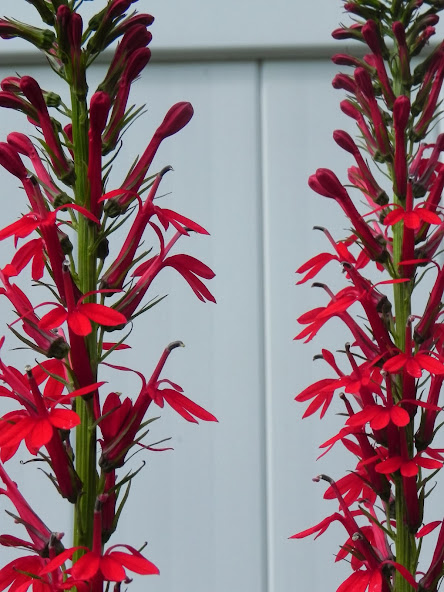
    Amongst our variety of native plants, three plants grow which were explicitly planted for the hummingbirds.

    Columbine


    Bee Balm


    Cardinal Flower


    The tiny birds show interest in other flowers, but they focus on these for a few reasons. Firstly each of these flowers (in our yard) is red (Note: We have red and pink Bee Balm). Just like the feeders and feed are red, hummingbirds really key in on the color red. Each of these flowers bloom at a different times of the year as well, in this order:

  • Columbine will open in May; they are one of the first to open in our yard every year.
  • Bee Balm blooms through most of the summer. It gets going around the time the Columbine is slowing down.
  • Cardinal flower blooms later in summer and with some luck will still have flowers in September.
  • By planting this combination of plants, the yard is pretty well set to provide a meal for hummingbirds for most of the duration of their stay. These flowers are all pretty easy to grow, and both Columbine and Cardinal flower will do well with some shade. In fact, my Columbines just get morning sun light, they spend much of their time in the shade. My Cardinal Flowers which are exposed to truly full sun seem to struggle a bit more than their neighbors which get some some shade.

    Bee Balm can be found in a few different colors. We have red and a pink color which is similar to the color of Wild Bergamont another member of the Monarda genus which is also good for attracting hummingbirds.

    Throughout the summer we have regular hummingbird visitors in the yard. We've even had some aerial combat this year. Planting for hummingbirds is pretty easy and adds splashes of vibrant colors to your lawn.

    Tuesday, September 1, 2015

    Backyard Apex Predators


    Take a minute to think about the wildlife which lives in your backyard. What comes to mind?

  • Eastern Cottontail Rabbits
  • Eastern Gray Squirrels (Maybe Fox or Red Squirrels)
  • Finches and Sparrows
  • Maybe some insects like ants or crickets.
  • Have you ever wondered about the food web of your yard? Or as Disney put it, "The Circle of Life"?

    To put it more plainly, who is eating who in your backyard?

    Who is at the top of the food web in your yard?

  • Neighborhood cats
  • Hawks or Owls
  • Foxes
  • Raccoons
  • Let's get one thing out of the way. Cats. Cats can be beneficial animals to have around, for example, on a farm to help control rodent populations. There is a neighborhood cat who frequently hunts in my yard, from watching him he's mostly interested in rodents and lagomorphs and other small mammals. The house cat is an introduced apex predator. This post is not going to address the environmental the complications of house cats on the ecology of a landscape; it is merely sufficient to say that cats are often our apex predators.

    Many of the other animals near the top of the food chain are birds. Coyotes, foxes, and raccoons certainly make their way into towns, and you may even have some in your yard. However to of the most common backyard predators are hawks. Red Tailed and Coopers Hawks seem to do rather well where there are people.


    Two Red Tailed Hawks hatched in our neighborhood this summer and spent a fair amount of time pursuing local rodents and stalking my bird feeders. While Red Tails are truly small mammal specialists, they are also well known opportunistic generalists. They attempted a number of occasions with more or less success to hunt birds in the yard.

    The Red Tails were never terribly successful at taking down other birds, but the Coopers Hawk with its smaller build and longer tail proved once again to be an effective Morning Dove hunter.

    When your yard is able to sustain more forms of life, the local food web becomes more apparent. Even if I had no bird feeders stocked full of seeds, the network remains intact. Our yard is now home to around 30 different species of native plant, many of which attract insects either as larva or later when nectar or fruits are available. In response, birds like House Wrens, or this evening, a Common Yellowthroat spend time amongst the plants eating the insects. If they are lucky they remain top of the food chain but of course a larger predator like a Coopers Hawk may prey on the birds.


    We don't often think of birds like Robins as being the top of the food chain but in many cases they might be. It is also important for us to keep in mind that if we are planting natives to attract butterflies and songbirds, we must also be prepared to accept the rest of the food chain. While the butterflies are beautiful they may be eaten, just as the songbirds may be silenced. We ought to consider the return of apex predators like hawks and owls a success and be confident in knowing that if our yard is healthy then its biodiversity with support all kinds of life even predatory kind.

    Sunday, June 1, 2014

    First Flowers of Spring 2014 - False Indigo, Blue Lupine, and Columbine

    After three years, our great backyard experiment is really starting to pay off. We started off the spring with cool, rainy weather, and we finally saw warmer weather in mid-May. The first plants to add color to the yard were the Serviceberries and the Eastern Redbud. These flowering trees and shrubs are regularly the first to bloom and add a splash of color. The Wood Violets also flowered, but while the ornamental trees and violets flowered, the garden plants grew tall and green.


    Our Redbud seemed to be particularly pink this year.

    We've had a recent warm streak, which brought with it semi-regular rain showers and thunder storms. With the warm weather and rain, the plants have grown. Yard maintenance has been relatively difficult to keep up with. The benefit has been each time I head out to weed, mow, trim, mulch or prune, I find something new has flowered.

    Columbine has grown wild behind our air conditioner since we moved in. Last year, we put down some Columbine seed near the existing plant in a previously unused flower bed. Two additional Columbines now grow with showy red flowers.


    The Columbine which prefers to grow behind the air conditioner.

    The flower bed in the front has its first Lupines. Last spring, we planted a half dozen Lupine plugs, but only two of the six came back after the long, cold winter. (We've seen similar results with the Little Blue Stems planted in the same bed.) We've added two more Lupines to the bed for now and noticed that some may have seeded themselves as some really little guys are also popping up.


    I would have been very sad if none of the Lupine had come back. This one is a fighter.

    After multiple years of rabbits chewing back the False Indigo, the fence has paid off, and we have some tall, attractive purple flowers in the main garden. So far, we have 3 of 5 flowering, and the Bumble Bees seem to e enjoying them.


    A small victory!

    These plants are well ahead of the other plants in the garden. It will still be awhile before the Purple Coneflower, Black Eyed Susans, or Butterfly Milkweed flower. The Columbine, Lupine, and Indigo add visual interest to the yard by providing dashes of red, blue, and purple. They also provide a food source for pollinators. We have seen Cabbage White Butterflies, Eastern Tiger Swallowtails, Bumble Bees, Honey Bees, and Large Carpenter Bees, and it's just the start of June. We're hoping to be able to report a record year for pollinators this year, and we'll be trying to focus on capturing each visitor digitally.

    How are your gardens doing this spring? Anything growing particularly well?

    Wednesday, May 14, 2014

    Biodiversity Timeline


    Let's talk a little bit about biodiversity. Biodiversity is a concept related to how many different species are part of a particular community. In this particular case, how many different species are part of our yards. In nature, the amount of life a place can sustain, the more healthy it is considered. In other words, high biodiversity and an ecosystem's health are directly related. The wonderful thing about our yards, is that we as the stewards have direct control over how biodiverse our property is. If we choose to maintain a homogenous monoculture of turf grass, then we elect to keep biodiversity low. If we choose to plant a variety of flowers, grasses, shrubs, and trees, then we elect to increase the yard's biodiversity. Here's our biodiversity story so far.

    2011

    We moved into our home in April of 2011. The yard was fairly sparse, noteworthy plants included Siberian Iris, Tulips, Daffodils, and Asiatic Lilies. The yard had no trees and two ornamental shrubs. Its diversity is documented in the table below.

    Flowers 4
    Grasses 0
    Shrubs 2
    Trees 0

    I immediately began to increase the yard's diversity focusing primarily on extending the existing flower bed and adding some shrubs.

    End of Spring 2011
    Flowers 13
    Grasses 2
    Shrubs 4
    Trees 0

    In the spring of 2012, we renewed our focus on adding native plants. We added trees to the yard in 2012, and it was the first year we started keeping track of our animal diversity. We wanted to see the impact the new plants had on the ecosystem of our yard.

    2012
    Flowers 13
    Grasses 2
    Shrubs 5
    Trees 5
    2012 Animal Species
    Reptiles and Amph 1
    Bees and Butterflies 13
    Mammals 5
    Birds 31

    In 2013, we spent some time trying to dig out and eliminate the non-native plants with only some success. We also added a couple more trees and replaced some shrubs which had been chewed back by the rabbits.

    2013
    Flowers 11
    Grasses 3
    Shrubs 5
    Trees 7
    2013 Animal Species
    Reptiles and Amph 1
    Bees and Butterflies 14
    Mammals 7
    Birds 40

    This year, we've focused on the front yard, and once again we've needed to replace some shrubs. Our most recent round of plant purchases included: Prairie Dropseed, Little Blue Stem, Blazing Star, Bee Balm (Genus Monarda), Obedient Plant, and Wild Onion.

    2014
    Flowers 14
    Grasses 3
    Shrubs 5
    Trees 7
    2014 Animal Species to Date
    Reptiles and Amph 0
    Bees and Butterflies 5
    Mammals 5
    Birds 37

    From what we can tell so far, it appears that as we increase the diversity of the plant life in our yard, the diversity of the animals which come to visit increases as well. Between the flowers, butterflies, birds, and shrubs, we have interesting colors in our yard from May through October. And while the winter has less visual interest, the regular bird traffic provides more visual appeal than what the yard would have otherwise.

    Here's a list of a the current plant species which have been planted intentionally in our yard:

      Flowers:
    • Blue Lupine
    • Blazing Star
    • Obedient Plant
    • Bee Balm
    • False Indigo
    • Cardinal Flower
    • Black Eyed Susan
    • Purple Coneflower
    • Prairie Coneflower
    • Columbine
    • Butterfly Milkweed
    • Pre-existing Tulips
    • Pre-existing Daffodils
      Grasses:
    • Big Blue Stem
    • Little Blue Stem
    • Prairie Dropseed
      Shrubs:
    • Serviceberry
    • Black Chokeberry
    • Pagoda Dogwood
    • Staghorn Sumac
    • Highbush Cranberry
      Trees:
    • Bur Oak
    • Red Oak
    • Quaking Aspen
    • White Spruce
    • White Pine
    • Washington Hawthorne
    • Eastern Redbud

    Saturday, May 3, 2014

    Plant by Habitat: Deciduous Forest

    A recent theme for many posts has been planting by habitat, whereby we've tried to identify native plants which can be planted together to simulate natural communities. For most of these communities trees are the backbone with shrubs and other plants being the guts. Depending on what you already have in your yard, you could be off to a good start. This post will focus on the Deciduous Forest.

    A number of tree species which can be easily found commercially may already be planted in your yard. In the Upper Midwest, trees common in yards and the forests include: the Sugar Maple, Red Maple, and White Oak. These trees are excellent shade trees for your yard, and they support a host of wildlife. Common forest birds which are likely to be attracted to these trees include: Red Bellied Woodpeckers, Downey and Hairy Woodpeckers, Black Capped Chickadees, White Breasted Nuthatches, Blue Jays, and Yellow Bellied Sapsuckers. Maple sap may even be eaten by migratory birds who take advantage of the Sapsucker's drill holes including Ruby Throated Hummingbirds. An Oak's acorns will attract a variety of other kinds of critters including Squirrels and Chipmunks. Mor e information on these trees can be found in earlier posts; Information on Oaks or Information on Maples.


    Red Bellied Woodpecker comes down for a visit.

    A number of other trees make up the skeleton of the deciduous forest; note that some of these trees may be more difficult to find than their Oak or Maple counterparts. These trees include: American Beech, American Elm, Basswood, Black Cherry, and Shagbark Hickory. Black Cherry will attract certain species of caterpillar which are eaten by birds, and the fruit of the tree will also attract our feathered friends including some which may not come as regularly to feeders such as Orchard Orioles. The Black Cherry is also very attractive when in bloom. The American Beech produces a nut which is smaller than an acorn. Beech nuts are eaten by Red Headed Woodpeckers, the Tufted Titmouse, and Red Breasted Nuthatches. The Shagbark Hickory's bark is an excellent hunting ground for birds like Nuthatches and the Brown Creeper as the bark is home to many insects.

    Once you've selected some variety of trees for your forest planting, you'll want to move on to the understory. The Mapleleaf Viburnum is a good Viburnum to consider when looking for forest shrubs. This plant can provide excellent cover and protection for birds and small mammals. It may produce abundant fruit eaten by birds like Grouse or Turkey. American Witchhazel has showy yellow flowers in the fall. The fruit produced by this shrub is eaten by Northern Bobwhites, Grouse, and Eastern Cottontail Rabbits. Witchhazel can be grown as a shrub or managed to be grown as a small tree.


    Birds like this Gray Catbird enjoy dense shrubby cover.

    If providing dense cover with trees and shrubs, you may encounter a challenge in selecting flowers which will tolerate the shade. Here are some suggestions for native flowers which you may be able to find for this habitat: Jack in the Pulpit, Large Flowered Trillium, and Virginia Bluebells. Trillium has a showy white flower which appears in May or June. The Bluebells grow low to the ground and have small blue flowers which present early in the year in April or May, around the same time the Jack in the Pulpit flowers.

    If interested in having a forest getaway, this post should be a good place to get started. Many other native plants also grow in the Deciduous Forest, ask your local nursery for more information. Happy planting.

    Sunday, April 27, 2014

    Five Native Plants Other than Flowers for Butterflies

    Everyone knows that during the summer, butterflies flit from flower to flower in our gardens, parks, and yards. Some understand that butterflies are after nectar and then plant flowers full of nectar to attract these painted insects. It's important however to remember that butterflies need different types of plants at different stages in their lifecycle. Here are a five plants to consider if you are interested in attracting butterflies.

    Black Cherry Tree: These Cherry Trees are native to much of the United States and are generally good plants for attracting wildlife. Their fruits are eaten by mammals and birds alike, and the flowers which precede the fruit are a good early source of nectar for butterflies. These tree is important for the Eastern Tiger Swallow Tail and the Red Spotted Purple butterflies who will lay their eggs on this tree. Larger than most other Cherry Trees, these tree may grow 50 - 80 feet high providing some protections for the attracted butterflies.


    The Black Swallowtail may use garden variety plants like Dill or Parsley as a host.

    Oaks: Oaks as discussed in a previous post play an important role in the ecology of the Midwest. These large trees provide shelter and food for a number animal species. When we reflect on these species we often think of Squirrels, Woodpeckers, Nuthatches, and Blue Jays. Oaks also are hosts for a few species of Hairstreak and Duskywing butterflies. When the eggs hatch, the caterpillars eat the foliage of the tree before becoming butterflies.

    Birches: These attractive trees are often found in front yards of people's homes. River Birch and Paper Birch are two common native trees you can find at most nurseries. Birch trees play host to a number of a caterpillars including: Mourning Cloak and Canadian Tiger Swallowtail butterflies which are two of the larger and more attractive species of the Midwest.

    Common Nettle: Stinging Nettle can be a real pain in the garden or yard especially when trying to remove it. If it's found in an out of the way location, consider leaving it in place. The Red Admiral Butterfly uses this weed as a host plant for its caterpillars.

    Bluestem Grasses: Both Little and Big Bluestem Grasses make attractive lawn or garden features, and both are easy to find at most nurseries. These plants are known for being attractive to birds, but these grasses are also host plants for a variety of Skipper species.


    This Indian Skipper may have grown up in our Bluestem Grasses.

    Even if you don't plant these particular plants in your butterfly garden, keep them in mind as you do other landscaping in your yard. There are also a whole bunch of other plants which can be used to attract butterflies. Remember when landscaping, that butterflies need more than just nectar, so the next time you are looking for a new tree, grass, or shrub take a look at this list to get started.

    Friday, April 18, 2014

    Plant by Habitat: Tall Grass Prairie

    If you're interested in finding plants which grow naturally together, you've come to the right place. So far, we've touched on Oak Savannas and Pine Barrens; this post will cover plants you can find commercially available if you're interested in planting a prairie.


    You too can grow a prairie. Here's a sample of ours including Purple Coneflower, Black Eyed Susan, and Blue Lupine

    Many retailers carry prairie mixes of native seed. These mixes are often tailored to some specific growing conditions. So make sure you've thought about where you intend lay the seed down. Here are some questions to consider: Is it dry or wet? Is it clay? How much sun or shade does the site receive? The mixes often also have themes like "best for butterflies" or "good for birds." This will impact the content of the mix. Most retailers provide details about the content of each mix detailing an expected percentage of seed per plant.

    One quick aside, if the site isn't getting a good amount of sun, prairie plants probably aren't the best choice, many depend on a lot of sun, after all it is the prairie.

    As such, I won't be focusing on trees this time, instead this post will focus in on some good varieties of plants you may wish to purchase for your prairie.

    Tall Plants: The prairie was home to many plants as tall or taller than an adult. If you are interested in these kinds of plants, that's great, but they certainly aren't for everyone. They can make a really nice background for other prairie plants.

    Big Blue Stem is an attractive, tall prairie grass which can readily grow to 7 feet. We have found that birds really enjoy it in the winter including: Dark Eyed Juncos, American Tree Sparrows, and Pine Siskins. During the summer, it's not unusual for us to find American Toads on the ground at the base of the plant which can be remarkably dense. Compass Plant is another attractive native which can grow to be remarkably tall. This isn't one we've attempted to grow ourselves, but we've seen the showy yellow flowers grown locally.


    Purple Coneflower is also very easy to grow and it attracts both birds and butterflies.

    Less Tall Plants: Other prairie plants may grow more lowly, but be aware that how tall they grow in year one may not represent how tall they will grow in year two. Our Purple Coneflowers, Cardinal Flowers, and Little Blue Stem have gotten remarkably tall, all easily exceeding 3 feet.

    Little Blue Stem is an easy to find plant which will grow as a bunch grass. It's remarkably easy to grow and the Dark Eyed Juncos seem to particularly enjoy it in the winter and early spring. Cardinal Flower has little red flag-like flowers which attract Ruby Throated Hummingbirds. It flowers a little later than some of the other wildflowers in our garden, adding some flavor to the garden a little later in the summer. This plant has actually done a little better when it's able to get some shade, our row that is in full sun seems to struggle a little more than a nearby row which gets a few more hours of shade each day.

    Legumes are handy plants to include in your planting. Legumes help put nitrogen back into the soil which is beneficial for other plants.

    False Indigo is a native legume which can grow into a big bush-like plant. It can be found with white or purple flowers which open earlier than some other plants you may include in your prairie such as Conefloewr or Black Eyed Susan. Blue Lupine is another native legume. Its blue flowers should appear in May ahead of the other native wildflowers. This plant is host to the Blue Karner Butterfly which is endangered. I've found that rabbits find both of these plants delicious so you may want to include some fencing to protect them as they grow.

    And one more important but miscellaneous plant...

    Butterfly Milkweed is a must have prairie plant for those who love the Monarch Butterfly. Its orange flowers may appear a little later than some of the other wildflowers, but it's a pollinators' delight. It doesn't seem to grow as tall as our Coneflower, but it can pretty dense, almost bush-like. Monarch Butterflies are attracted to this plant both for the flowers as adults, but it is also host to Monarch caterpillars.


    Butterfly Milkweed's orange flowers up close.

    There are many other plants you want to consider. The ones above only represent a small sample of the plants you want to consider. A number of other plants like: Prairie Dropseed, Blazing Star, Joe Pye Weed, Ox Eye Sunflower, and Prairie Coneflower are pretty easy to find commercially. The combination of height and color is up to you, and the choices are almost limitless. Good luck and enjoy.

    Saturday, April 12, 2014

    Plant by Habitat: Pine Barrens

    In the previous Plant by Habitat post, we identified some plant species to combine in a yard to create an Oak Savanna, in this edition, we'll describe some plants which are found in Pine Barrens.

    Pine Barrens are habitat found in the Upper Midwest in parts Minnesota, Wisconsin, and Michigan. Pine Barrens are home to coniferous trees like Jack or Red Pine which do well in acidic soils. Poor soil quality and highly acidic soil are characteristics of the barrens which impact what types of plants grow in these communities.

    Sandy or acidic soils in your own yard may prompt you to consider planting species found in pine barrens together. The first step for creating your Pine Barren is to find the correct tree species. First you'll need Pines, and you'll start with Jack or Red Pine. You can also consider Oaks, which are commonly also featured in Pine Barrens.

    Once the trees are selected, you'll want to move onto the shrubs and understory. A pine barren doesn't support much of an understory, hence the name, but certain shrubby plants are found amongst the pines. These plants include two which are commercially available and which strongly support wildlife: the American Hazelnut and the Low Bush Blueberry. Hazelnuts are eaten by a variety animals including small mammals, Wild Turkey, and Grouse. The sweet blueberries are enjoyed by people as well our animal neighbors.


    Lupine is an attractive ground cover found in the Pine Barrens.

    Much like the Oak Savanna, this habitat was filled with prairie grasses and wildflowers. Plants common to the Pine Barrens include June Grass, Little Blue Stem, Blazing Star, and Blue Lupine. The Lupine is of particular importance to the habitat. It is a legume and puts nitrogen back into the soil for use by other plant species. It is also the host for the endangered Karner Blue Butterfly whose caterpillars feed on the leaves.

    Endangered butterflies may not be the only interesting visitors to your lawn if you successfully establish a Pine Barren. By planting Jack Pines and Blueberries in particular you may help the recovery of the endangered Kirkland's Warbler as your yard may become an attractive nesting site.

    For More Information:

    WI DNR - Pine Barrens
    MI DNR - Pine Barrens

    Tuesday, April 8, 2014

    Plant by Habitat: Oak Savanna

    Recently I posted information about native Oaks and later realized it might be helpful to have some information not just about which plants are native vs invasive, but it may also be helpful to have some sense of which native plants actually grow together naturally. Over the next couple of weeks, I'll do some "Plant by Habitat" posts to hopefully help inform decisions about which native plants to purchase together.

    The Oak Savanna is a type of habitat which features large Oaks with room to really spread their limbs. These savannas were once found throughout the Midwest and served as the boarder between the prairies and grasslands of the Great Plains and the forests of the Eastern United States. A variety of Oak species were found in the savannas including: Black Oak, Bur Oak, Northern Red Oak, and White Oak. These trees can be found commercially available, and if you are interested in planting your own Oak Savanna, an Oak is a good place to start.

    That said other trees and plants could be found in the savannas. Shagbark Hickory and Black Cherry are also excellent savanna trees to consider. Black Cherry is particularly interesting as it is a host for a variety of caterpillars and its fruit is eaten by many birds.

    Once you've selected your trees, you are on to deciding what will go in the understory. You will need to decide exactly how wide open your savanna will be. Some savannas would have had some shrubby understory if less frequented by fire, but those more frequented by fire would have had more prairie grasses and flowers.


    Highbush Cranberry can be really attractive in the fall.

    My favorite shrubs to consider are Viburnums. American Highbush Cranberry, Nannyberry, and Mapleleaf Viburnum are interesting choices. Viburnums tend to be pretty tolerant of most growing situations, have attractive foliage in the fall, and they tend to be pretty easy to find commercially. These are really great shrubs, we have 4 Highbush Cranberries and 2 Nannyberries in our yard. Pagoda Dogwood, Hazelnut, and Staghorn Sumac are also good choices. The Sumac and the Dogwood are fairly shade tolerant, so they may not be best suited to an open savanna habitat, they do however produce fruit which can be eaten by birds. The Hazelnut will produce nuts which fall to ground and are eaten by mammals like Gray, Red, or Fox Squirrels but also by Wild Turkey and Ruffed Grouse.

    By this point, you have a tree or two selected; you've decided on a shrub or two, and now you need something to cover the ground. You are now looking for plants which do well when burned back semi-regularly. You are going to want some prairie grasses, some of the easiest species to acquire are Little Blue Stem, Big Blue Stem, and Prairie Dropseed. The flowers for an Oak Savanna can be more difficult to find but they include plants loved by butterflies such as Purple Milkweed and Common Milkweed. Shooting Star, Wild Indigo, and Wild Columbine are also reasonably easy to find as plugs or seeds.


    We put in a few indigo plants last year which were not by the rabbits.

    With these plants in place, a lawn would be replaced with a small Oak Savanna. It would be fairly biodiverse in terms of plants species and be able to support a number of bird and butterfly species. If you live in the Midwest (see map), there is a reasonable chance your yard was once in fact part of the Oak Savannas. The Oak Savannas were replaced with farmland and then the farmland with subdivisions, so why not give part of your yard back and return it to nature, after all the birds and the butterflies are the ones who have to live with it.

    Wednesday, April 2, 2014

    Winged Wednesday - Five Favorite Plants for Feeding the Birds

    Although bird feeders, bird baths, and bird houses are all good ways to attract birds to your yard, the most effective way to attract birds is to turn your yard into a bird sanctuary through landscaping. Plants can provide shelter for roosting or nesting, and they can provide food. Here are some great native plants for you to consider when landscaping your yard for wildlife.

    Cardinal Flower is an interesting wildflower with brilliant red flowers which display almost like flags. It's relatively easy to grow. We have two rows of it, one which is in partial shade, and the other is full sun. The row in partial shade does better than the role in full sun. Our Cardinal Flowers grew to be a little more than 3 feet tall last summer. The plant doesn't produce fruit or abundant seed, but it did have frequent visits from Ruby Throated Hummingbirds in July and August.


    A couple of our Cardinal Flowers

    Purple Coneflower is a familiar wildflower for many. It's an attractive pinkish flower which can grow to be fairly tall. We had some this last year which grew to be 4 feet tall. Our Coneflowers grow in full sun and are planted quite thickly. During the early spring when they are mostly leafy vegetation, they are frequented by rabbits for shelter and even Mourning Doves. During the summer when the flowers have bloomed, the local House Wrens do a fair amount of insect hunting amongst them. The Coneflowers produce abundant seed and attract American Goldfinches, Dark Eyed Juncos, Pine Siskins, and American Tree Sparrows in the fall and winter after the plant has become dry and brown.


    Wren catches spider in the Purple Coneflower.

    Black Eyed Susan is another familiar widflower. Our Black Eyed Susans grow mixed in with our Purple Coneflowers, our neighbor refers to it as "the jungle". The Black Eyed Susans don't grow as tall as the Coneflowers, but they do spread abundant seed around. They tend attract the same group of birds during the fall and winter as the Purple Conflower.


    American Goldfinch finds a wildflower snack.

    Allegheny Serviceberry is a shrub which produces a white flower in the spring. Ours is planted at the center and rear of the wildflower garden. We planted it last year, and it produced some fruit. After I had seen American Robins and Northern Cardinals eat some of the berries, I decided it might be something to try. I won't try them again; the birds can keep them. In the end, it's an attractive flowering shrub which produces berries eaten by birds (even if not eaten by humans); we're so happy with our one that we've decided to plant a couple more this year to replace the Coralberry bushes which were eaten by the rabbits.

    Big Blue Stem is a tall native grass which grows to around 7 feet or so. It lines the back of our wildflower garden and is remarkably attractive both when green and fresh as well as later when dry and golden. Seed tassels form at the top, and each winter we enjoy watching the birds land on the stalks, attempting to attain the seed they seek. The bottom of Big Blue Stem is thick and full and provides some winter cover as well. We've seen American Goldfinches, Pine Siskins, American Tree Sparrows, and Dark Eyed Juncos in the Big Blue Stem during the winter.


    American Tree Sparrow enjoys the Big Blue Stem.

    One key is planting a good variety of plants. Having a diverse set of plants will help provide food at different times of the year for different kinds of birds. We've also tried to plant in bunches, the Hummingbirds for example will have an easier time finding a cluster of a dozen or more Cardinal Flowers than if you just plant a couple. In the end, these plants are all attractive and showy while having the added effect of attracting wildlife; what more can you ask for?

    Sunday, March 30, 2014

    Stop the European Oak Borer! Go with Native Oaks Instead!

    Oaks make excellent hardwood, shade trees. They grow tall and full and once grew in large oak forests and oak savannas in North America. They are excellent for wildlife; they provide homes for cavity nest birds, acorns are eaten by birds and mammals, and they house a variety of insects which in turn provide food for other animals like Woodpeckers, Nuthatches, and Creepers. If you are looking to plant an Oak, you will find that you have a host of options; here's some information on the Oaks you may encounter.

    The Heritage Oak or the English Oak is an invasive species from Europe. It's commercially available and has introduced the European Oak Borer to Oak forests in Canada and Michigan. The European Oak Borer is a potential threat to native Oak species and provides sufficient justification for planting native Oaks instead.

    Historically many of the ecosystems found in the Midwest were transitionary from the forests of the Eastern United States to the prairies and grasslands of the Great Plains. Many species of Oak are relatively fire tolerant; this meant that they could survive grassland fires when other species of tree could not. The specific species of Oak which made up the Oak Savanna varied by state, but the following species are likely to be commercially at your local nursery and could be found in the Oak Savanna:

    • Black Oak
    • Bur Oak
    • Norther Red Oak
    • Pin Oak
    • Swamp White Oak
    • White Oak

    Drier, more open sites may have been more prone to fire. The Bur Oak, Black Oak, and White Oak grew in stands along side prairie grasses and wildflowers as well as shrubs like the American Hazelnut. Cavity nesters which depended on these stands include the Eastern Bluebird and Red Headed Woodpecker. The Red Headed Woodpecker is a species in decline due in part to its dependence on these sites and particularly its use of dead Oaks when nesting.

    Fuller stands of Oak also included the Northern Red Oak but would have appeared with fewer prairie grasses and wildflowers. The frequent wildfires prevented the development of much woody or shrubby understory, but thicker stands of Oaks would have had shade tolerant plants growing below them such as Culver's Root, Bottle Brush Grass, or Bush Clover. Denser stands of Oak can support bird species normally associated with woodlands including: Tufted Titmouse, Scarlet Tanager, and Yellow Throated Vireo.


    This American Robin surveyed the ground below from our Northern Red Oak

    We've opted to plant a Northern Red Oak and a Swamp White Oak in the northern half of our front yard. We also included two Nanny Berry Viburnums, after reading this list of shrubs. This summer to continue the Oak-Savanna-fication of our yard, we plan to put in some Little Blue Stem and some TBD wildflowers. This effort will help contribute to creating a no-mow area in the front and help us landscape using plants from the same biome to recreate habitat.


    This is the Red Oak we planted two years ago in our front yard.

    If you are interested in getting starting with native plants, Oaks are great place to start because there are so many to choose from, and they are capable of doing a lot of good on their own supporting countless species which I did not detail here. If you are so inclined, here are some other good reads about Oak habitats:

    Tuesday, March 25, 2014

    Leave that Austrian Pine Behind, Try These Pines Instead

    Conifers make really great additions to our lawns. Many remain green through the winter; they provide shelter for birds, and they can be used as wind blocks. They can grow into big, majestic looking trees which cry out "wilderness" as though they belong with the great Redwoods of the West Coast.

    Pine trees in particular strike us. More often than not when evergreen trees are misidentified, they are misidentified as pines. "Look at those pine trees." "I found those pine cones." In many cases, the tree identified could be a Fir or Spruce. People assume Pine and evergreen are synonymous. This says something about Pines, they are the representative for all evergreen trees.

    The Austrian Pine is a relatively popular choice for yard and urban plantings. The tree tends be very full and is popular because it's tolerant of winter salting. This tree is capable of naturalizing and becoming invasive. It was cleared from the Sleeping Bear Dunes on Lake Michigan in 2011 and can be found in wild tree stands in the Eastern United States.

    Like many other plants, there are native alternatives to consider when selecting a pine.

    The Eastern White Pine is an excellent choice. Not only is it native, but it's fairly common and commercially available. It's also the tallest conifer native to the Eastern U.S. The White Pine grows quickly but is not as salt tolerant as the Austrian Pine. White Pines are not necessarily good choices when planting along side roads and sidewalks because they may succumb to salt injury. However, they can be a beautiful addition to your yard and may help attract song birds such as Pine Grosbeaks.


    This Eastern White Pine grows in our front yard.

    The Jack Pine can be found natively in parts of the Midwest including Minnesota, Wisconsin, Illinois, and Michigan. Young Jack Pines may attract nesting Kirtland's Warblers, so like the Eastern White Pine they can be good for attracting birds. They are also one of the first trees to grow after forest fires as the cones will open from immense heat of the fire. Jack Pine is more salt tolerant than White Pine and will do better along roadsides.

    Red Pine (also called Norway Pine) is native to Minnesota, Wisconsin, Illinois, and Michigan. It is the official state tree of Minnesota. The tree tends to be very healthy and resistant to pests. This Pine does not grow as tall as other Pines and should max out around 50 feet. The Red Pine can be an attractive addition to your landscaping because of its unique reddish bark. The Red Pine like the White Pine may succumb to salt injury and should not be planted in areas which receive heavy winter salting.

    If you are planning on putting in any Pines this spring try to see if you can find a White Pine, Jack Pine, or a Red Pine; they are excellent choices when going native.

    Saturday, March 15, 2014

    Don't Plant That Spruce! Plant This One Instead.

    Spruces. Many people opt to plant Spruces when choosing an evergreen for their yard. Evergreens make for good wind blocks, provide shelter for nesting birds, and add some color in Winter. Spruce trees also make for an interesting topic of discussion for anyone interested in debating the line between native and invasive plant species.

    Two of the most common Spruces planted are the Norway Spruce and the Colorado Blue Spruce. The Norway Spruce is native to Europe. The Colorado Blue Spruce is native to North America, but not the Upper Midwest. It is home to Colorado and Wyoming, but it has been planted throughout the United States. The blue color of its needles makes it a very attractive plant. As for whether or it is invasive or native, for purposes of this blog, it's invasive as it is not native to the Midwest.

    Two native options which can be a little more difficult to find are the White Spruce and the Black Spruce. White Spruce can be found natively in Minnesota, Michigan, and Wisconsin. Its native range goes well beyond the Midwest spreading eastward to New York and westward towards Alaska and Montana. Black Spruce occupies a similar range spreading northward.


    Black Hills Spruce

    Finding native Spruces can be difficult, but a subspecies of White Spruce, the Black Hills Spruce, can be found fairly easily. White Spruce can be found in stands growing with Black Spruce, Aspen, and Birch. Spruce trees provide food and cover for a number of birds including: Grouse, Red Breast Nuthatches, Red Crossbills, Pine Grosbeaks, and Pine Siskins.


    Red Breasted Nuthatch Visiting For Peanuts

    To help form a partial wind block at the northern end of our yard, we planted a Black Hills Spruce in line with an Eastern White Pine. They are about 14 feet apart. Between these two but staggered to the South we planted a Quaking Aspen. Each tree is planted near the center of a 10 by 10 square. Something like this:

    Pine
    Aspen
    Spruce

    This year we plan to fill in the empty spaces with other shrubs and native grasses to form a "no mow zone" at the North end of the yard, and to provide some cover for ground dwelling birds. If you have suggestions for which shrubs or plants we should add to our "no mow zone", feel free to send your thoughts our way.