Climate Crisis

Climate Crisis

Recurring record breaking weather events such as fires, hurricanes, and flooding have become common news. Pollinators like monarch butterflies and honey bees are in decline. Research now indicates that North America's bird population has decreased by 30% in 40 years. And NEWSFLASH! You can be part of the solution.

Take Action

+  3 BillionBIrds.ORG #BringBirdsBack
    -----------------------------------------------
+  Million Pollinator Gardens Network
    -----------------------------------------------


Showing posts with label grasses. Show all posts

Wednesday, May 14, 2014

Biodiversity Timeline


Let's talk a little bit about biodiversity. Biodiversity is a concept related to how many different species are part of a particular community. In this particular case, how many different species are part of our yards. In nature, the amount of life a place can sustain, the more healthy it is considered. In other words, high biodiversity and an ecosystem's health are directly related. The wonderful thing about our yards, is that we as the stewards have direct control over how biodiverse our property is. If we choose to maintain a homogenous monoculture of turf grass, then we elect to keep biodiversity low. If we choose to plant a variety of flowers, grasses, shrubs, and trees, then we elect to increase the yard's biodiversity. Here's our biodiversity story so far.

2011

We moved into our home in April of 2011. The yard was fairly sparse, noteworthy plants included Siberian Iris, Tulips, Daffodils, and Asiatic Lilies. The yard had no trees and two ornamental shrubs. Its diversity is documented in the table below.

Flowers 4
Grasses 0
Shrubs 2
Trees 0

I immediately began to increase the yard's diversity focusing primarily on extending the existing flower bed and adding some shrubs.

End of Spring 2011
Flowers 13
Grasses 2
Shrubs 4
Trees 0

In the spring of 2012, we renewed our focus on adding native plants. We added trees to the yard in 2012, and it was the first year we started keeping track of our animal diversity. We wanted to see the impact the new plants had on the ecosystem of our yard.

2012
Flowers 13
Grasses 2
Shrubs 5
Trees 5
2012 Animal Species
Reptiles and Amph 1
Bees and Butterflies 13
Mammals 5
Birds 31

In 2013, we spent some time trying to dig out and eliminate the non-native plants with only some success. We also added a couple more trees and replaced some shrubs which had been chewed back by the rabbits.

2013
Flowers 11
Grasses 3
Shrubs 5
Trees 7
2013 Animal Species
Reptiles and Amph 1
Bees and Butterflies 14
Mammals 7
Birds 40

This year, we've focused on the front yard, and once again we've needed to replace some shrubs. Our most recent round of plant purchases included: Prairie Dropseed, Little Blue Stem, Blazing Star, Bee Balm (Genus Monarda), Obedient Plant, and Wild Onion.

2014
Flowers 14
Grasses 3
Shrubs 5
Trees 7
2014 Animal Species to Date
Reptiles and Amph 0
Bees and Butterflies 5
Mammals 5
Birds 37

From what we can tell so far, it appears that as we increase the diversity of the plant life in our yard, the diversity of the animals which come to visit increases as well. Between the flowers, butterflies, birds, and shrubs, we have interesting colors in our yard from May through October. And while the winter has less visual interest, the regular bird traffic provides more visual appeal than what the yard would have otherwise.

Here's a list of a the current plant species which have been planted intentionally in our yard:

    Flowers:
  • Blue Lupine
  • Blazing Star
  • Obedient Plant
  • Bee Balm
  • False Indigo
  • Cardinal Flower
  • Black Eyed Susan
  • Purple Coneflower
  • Prairie Coneflower
  • Columbine
  • Butterfly Milkweed
  • Pre-existing Tulips
  • Pre-existing Daffodils
    Grasses:
  • Big Blue Stem
  • Little Blue Stem
  • Prairie Dropseed
    Shrubs:
  • Serviceberry
  • Black Chokeberry
  • Pagoda Dogwood
  • Staghorn Sumac
  • Highbush Cranberry
    Trees:
  • Bur Oak
  • Red Oak
  • Quaking Aspen
  • White Spruce
  • White Pine
  • Washington Hawthorne
  • Eastern Redbud

Sunday, April 27, 2014

Five Native Plants Other than Flowers for Butterflies

Everyone knows that during the summer, butterflies flit from flower to flower in our gardens, parks, and yards. Some understand that butterflies are after nectar and then plant flowers full of nectar to attract these painted insects. It's important however to remember that butterflies need different types of plants at different stages in their lifecycle. Here are a five plants to consider if you are interested in attracting butterflies.

Black Cherry Tree: These Cherry Trees are native to much of the United States and are generally good plants for attracting wildlife. Their fruits are eaten by mammals and birds alike, and the flowers which precede the fruit are a good early source of nectar for butterflies. These tree is important for the Eastern Tiger Swallow Tail and the Red Spotted Purple butterflies who will lay their eggs on this tree. Larger than most other Cherry Trees, these tree may grow 50 - 80 feet high providing some protections for the attracted butterflies.


The Black Swallowtail may use garden variety plants like Dill or Parsley as a host.

Oaks: Oaks as discussed in a previous post play an important role in the ecology of the Midwest. These large trees provide shelter and food for a number animal species. When we reflect on these species we often think of Squirrels, Woodpeckers, Nuthatches, and Blue Jays. Oaks also are hosts for a few species of Hairstreak and Duskywing butterflies. When the eggs hatch, the caterpillars eat the foliage of the tree before becoming butterflies.

Birches: These attractive trees are often found in front yards of people's homes. River Birch and Paper Birch are two common native trees you can find at most nurseries. Birch trees play host to a number of a caterpillars including: Mourning Cloak and Canadian Tiger Swallowtail butterflies which are two of the larger and more attractive species of the Midwest.

Common Nettle: Stinging Nettle can be a real pain in the garden or yard especially when trying to remove it. If it's found in an out of the way location, consider leaving it in place. The Red Admiral Butterfly uses this weed as a host plant for its caterpillars.

Bluestem Grasses: Both Little and Big Bluestem Grasses make attractive lawn or garden features, and both are easy to find at most nurseries. These plants are known for being attractive to birds, but these grasses are also host plants for a variety of Skipper species.


This Indian Skipper may have grown up in our Bluestem Grasses.

Even if you don't plant these particular plants in your butterfly garden, keep them in mind as you do other landscaping in your yard. There are also a whole bunch of other plants which can be used to attract butterflies. Remember when landscaping, that butterflies need more than just nectar, so the next time you are looking for a new tree, grass, or shrub take a look at this list to get started.

Friday, April 18, 2014

Plant by Habitat: Tall Grass Prairie

If you're interested in finding plants which grow naturally together, you've come to the right place. So far, we've touched on Oak Savannas and Pine Barrens; this post will cover plants you can find commercially available if you're interested in planting a prairie.


You too can grow a prairie. Here's a sample of ours including Purple Coneflower, Black Eyed Susan, and Blue Lupine

Many retailers carry prairie mixes of native seed. These mixes are often tailored to some specific growing conditions. So make sure you've thought about where you intend lay the seed down. Here are some questions to consider: Is it dry or wet? Is it clay? How much sun or shade does the site receive? The mixes often also have themes like "best for butterflies" or "good for birds." This will impact the content of the mix. Most retailers provide details about the content of each mix detailing an expected percentage of seed per plant.

One quick aside, if the site isn't getting a good amount of sun, prairie plants probably aren't the best choice, many depend on a lot of sun, after all it is the prairie.

As such, I won't be focusing on trees this time, instead this post will focus in on some good varieties of plants you may wish to purchase for your prairie.

Tall Plants: The prairie was home to many plants as tall or taller than an adult. If you are interested in these kinds of plants, that's great, but they certainly aren't for everyone. They can make a really nice background for other prairie plants.

Big Blue Stem is an attractive, tall prairie grass which can readily grow to 7 feet. We have found that birds really enjoy it in the winter including: Dark Eyed Juncos, American Tree Sparrows, and Pine Siskins. During the summer, it's not unusual for us to find American Toads on the ground at the base of the plant which can be remarkably dense. Compass Plant is another attractive native which can grow to be remarkably tall. This isn't one we've attempted to grow ourselves, but we've seen the showy yellow flowers grown locally.


Purple Coneflower is also very easy to grow and it attracts both birds and butterflies.

Less Tall Plants: Other prairie plants may grow more lowly, but be aware that how tall they grow in year one may not represent how tall they will grow in year two. Our Purple Coneflowers, Cardinal Flowers, and Little Blue Stem have gotten remarkably tall, all easily exceeding 3 feet.

Little Blue Stem is an easy to find plant which will grow as a bunch grass. It's remarkably easy to grow and the Dark Eyed Juncos seem to particularly enjoy it in the winter and early spring. Cardinal Flower has little red flag-like flowers which attract Ruby Throated Hummingbirds. It flowers a little later than some of the other wildflowers in our garden, adding some flavor to the garden a little later in the summer. This plant has actually done a little better when it's able to get some shade, our row that is in full sun seems to struggle a little more than a nearby row which gets a few more hours of shade each day.

Legumes are handy plants to include in your planting. Legumes help put nitrogen back into the soil which is beneficial for other plants.

False Indigo is a native legume which can grow into a big bush-like plant. It can be found with white or purple flowers which open earlier than some other plants you may include in your prairie such as Conefloewr or Black Eyed Susan. Blue Lupine is another native legume. Its blue flowers should appear in May ahead of the other native wildflowers. This plant is host to the Blue Karner Butterfly which is endangered. I've found that rabbits find both of these plants delicious so you may want to include some fencing to protect them as they grow.

And one more important but miscellaneous plant...

Butterfly Milkweed is a must have prairie plant for those who love the Monarch Butterfly. Its orange flowers may appear a little later than some of the other wildflowers, but it's a pollinators' delight. It doesn't seem to grow as tall as our Coneflower, but it can pretty dense, almost bush-like. Monarch Butterflies are attracted to this plant both for the flowers as adults, but it is also host to Monarch caterpillars.


Butterfly Milkweed's orange flowers up close.

There are many other plants you want to consider. The ones above only represent a small sample of the plants you want to consider. A number of other plants like: Prairie Dropseed, Blazing Star, Joe Pye Weed, Ox Eye Sunflower, and Prairie Coneflower are pretty easy to find commercially. The combination of height and color is up to you, and the choices are almost limitless. Good luck and enjoy.

Tuesday, April 8, 2014

Plant by Habitat: Oak Savanna

Recently I posted information about native Oaks and later realized it might be helpful to have some information not just about which plants are native vs invasive, but it may also be helpful to have some sense of which native plants actually grow together naturally. Over the next couple of weeks, I'll do some "Plant by Habitat" posts to hopefully help inform decisions about which native plants to purchase together.

The Oak Savanna is a type of habitat which features large Oaks with room to really spread their limbs. These savannas were once found throughout the Midwest and served as the boarder between the prairies and grasslands of the Great Plains and the forests of the Eastern United States. A variety of Oak species were found in the savannas including: Black Oak, Bur Oak, Northern Red Oak, and White Oak. These trees can be found commercially available, and if you are interested in planting your own Oak Savanna, an Oak is a good place to start.

That said other trees and plants could be found in the savannas. Shagbark Hickory and Black Cherry are also excellent savanna trees to consider. Black Cherry is particularly interesting as it is a host for a variety of caterpillars and its fruit is eaten by many birds.

Once you've selected your trees, you are on to deciding what will go in the understory. You will need to decide exactly how wide open your savanna will be. Some savannas would have had some shrubby understory if less frequented by fire, but those more frequented by fire would have had more prairie grasses and flowers.


Highbush Cranberry can be really attractive in the fall.

My favorite shrubs to consider are Viburnums. American Highbush Cranberry, Nannyberry, and Mapleleaf Viburnum are interesting choices. Viburnums tend to be pretty tolerant of most growing situations, have attractive foliage in the fall, and they tend to be pretty easy to find commercially. These are really great shrubs, we have 4 Highbush Cranberries and 2 Nannyberries in our yard. Pagoda Dogwood, Hazelnut, and Staghorn Sumac are also good choices. The Sumac and the Dogwood are fairly shade tolerant, so they may not be best suited to an open savanna habitat, they do however produce fruit which can be eaten by birds. The Hazelnut will produce nuts which fall to ground and are eaten by mammals like Gray, Red, or Fox Squirrels but also by Wild Turkey and Ruffed Grouse.

By this point, you have a tree or two selected; you've decided on a shrub or two, and now you need something to cover the ground. You are now looking for plants which do well when burned back semi-regularly. You are going to want some prairie grasses, some of the easiest species to acquire are Little Blue Stem, Big Blue Stem, and Prairie Dropseed. The flowers for an Oak Savanna can be more difficult to find but they include plants loved by butterflies such as Purple Milkweed and Common Milkweed. Shooting Star, Wild Indigo, and Wild Columbine are also reasonably easy to find as plugs or seeds.


We put in a few indigo plants last year which were not by the rabbits.

With these plants in place, a lawn would be replaced with a small Oak Savanna. It would be fairly biodiverse in terms of plants species and be able to support a number of bird and butterfly species. If you live in the Midwest (see map), there is a reasonable chance your yard was once in fact part of the Oak Savannas. The Oak Savannas were replaced with farmland and then the farmland with subdivisions, so why not give part of your yard back and return it to nature, after all the birds and the butterflies are the ones who have to live with it.

Wednesday, April 2, 2014

Winged Wednesday - Five Favorite Plants for Feeding the Birds

Although bird feeders, bird baths, and bird houses are all good ways to attract birds to your yard, the most effective way to attract birds is to turn your yard into a bird sanctuary through landscaping. Plants can provide shelter for roosting or nesting, and they can provide food. Here are some great native plants for you to consider when landscaping your yard for wildlife.

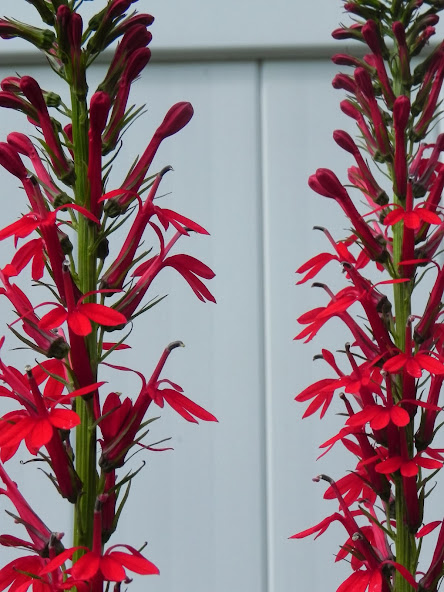
Cardinal Flower is an interesting wildflower with brilliant red flowers which display almost like flags. It's relatively easy to grow. We have two rows of it, one which is in partial shade, and the other is full sun. The row in partial shade does better than the role in full sun. Our Cardinal Flowers grew to be a little more than 3 feet tall last summer. The plant doesn't produce fruit or abundant seed, but it did have frequent visits from Ruby Throated Hummingbirds in July and August.


A couple of our Cardinal Flowers

Purple Coneflower is a familiar wildflower for many. It's an attractive pinkish flower which can grow to be fairly tall. We had some this last year which grew to be 4 feet tall. Our Coneflowers grow in full sun and are planted quite thickly. During the early spring when they are mostly leafy vegetation, they are frequented by rabbits for shelter and even Mourning Doves. During the summer when the flowers have bloomed, the local House Wrens do a fair amount of insect hunting amongst them. The Coneflowers produce abundant seed and attract American Goldfinches, Dark Eyed Juncos, Pine Siskins, and American Tree Sparrows in the fall and winter after the plant has become dry and brown.


Wren catches spider in the Purple Coneflower.

Black Eyed Susan is another familiar widflower. Our Black Eyed Susans grow mixed in with our Purple Coneflowers, our neighbor refers to it as "the jungle". The Black Eyed Susans don't grow as tall as the Coneflowers, but they do spread abundant seed around. They tend attract the same group of birds during the fall and winter as the Purple Conflower.


American Goldfinch finds a wildflower snack.

Allegheny Serviceberry is a shrub which produces a white flower in the spring. Ours is planted at the center and rear of the wildflower garden. We planted it last year, and it produced some fruit. After I had seen American Robins and Northern Cardinals eat some of the berries, I decided it might be something to try. I won't try them again; the birds can keep them. In the end, it's an attractive flowering shrub which produces berries eaten by birds (even if not eaten by humans); we're so happy with our one that we've decided to plant a couple more this year to replace the Coralberry bushes which were eaten by the rabbits.

Big Blue Stem is a tall native grass which grows to around 7 feet or so. It lines the back of our wildflower garden and is remarkably attractive both when green and fresh as well as later when dry and golden. Seed tassels form at the top, and each winter we enjoy watching the birds land on the stalks, attempting to attain the seed they seek. The bottom of Big Blue Stem is thick and full and provides some winter cover as well. We've seen American Goldfinches, Pine Siskins, American Tree Sparrows, and Dark Eyed Juncos in the Big Blue Stem during the winter.


American Tree Sparrow enjoys the Big Blue Stem.

One key is planting a good variety of plants. Having a diverse set of plants will help provide food at different times of the year for different kinds of birds. We've also tried to plant in bunches, the Hummingbirds for example will have an easier time finding a cluster of a dozen or more Cardinal Flowers than if you just plant a couple. In the end, these plants are all attractive and showy while having the added effect of attracting wildlife; what more can you ask for?

Tuesday, March 4, 2014

Know Your Weed Ordinances

Many cities have regulations about lawn care, in particular they tend concern themselves with noxious weeds. Noxious weeds are typically highly invasive plants which grow rapidly and are concerned a threat to agriculture. The list of weeds varies some by state.

If you are considering a no mow lawn you will want to be aware of these plants and local regulations. These plants are not likely to be something you have intentionally planted, but that doesn't mean they won't take root amongst your native plants. Given that going to a native plant landscape can stir some trouble with the neighbors, it's best to make sure any complaints they may have are not legitimate. Be sure to weed out or remove any noxious weeds.

Most municipalities have ordinances which read something like this:

Properties should be maintained, with lawns, hedges and bushes kept from becoming overgrown or decayed. Vines, grass and rank vegetation may not exceed a height of 6 inches on developed lots and 12 inches on undeveloped lots. Trees limbs near sidewalks should dip no lower than 8 feet from the ground. Overhanging branches may be trimmed back to the property line. Dead trees and limbs or other natural growth that is rotting should be removed.

Noxious weeds must be cut down prior to blooming, and in no case shall be allowed to grow to a length of 6 inches or more on developed lots and 12 inches or more on undeveloped lots.

Check with your local government to make sure you understand any local regulations before going mow free. Also consider lower growing plants when choosing natives, as this may help you steer clear of trouble.

The goal isn't just about growing native plants in your yard, but ideally convincing others to do the same, and this may mean being a good neighbor while playing by the rules.